
Module 02
The big picture: from two cells to a newborn
The whole of human development in one module: how egg and sperm become an embryo, a fetus and a baby, and how to read the two different ways of counting weeks.
- 5lessons
- 20 minreading
- 6quiz questions
The lessons and the quiz in this module are part of the Fertility with Kara Package. Module 1 is free to read.
Your way through Module 02
- Lesson 2.1 · 4 min Start hereRead The whole story on one page A map of human development from egg and sperm to birth, so every later module has a place to sit.
- Lesson 2.2 · 4 min Start hereRead Two clocks for counting weeks Why "6 weeks pregnant" and "a 4-week-old embryo" describe the same moment, and which clock this course uses.
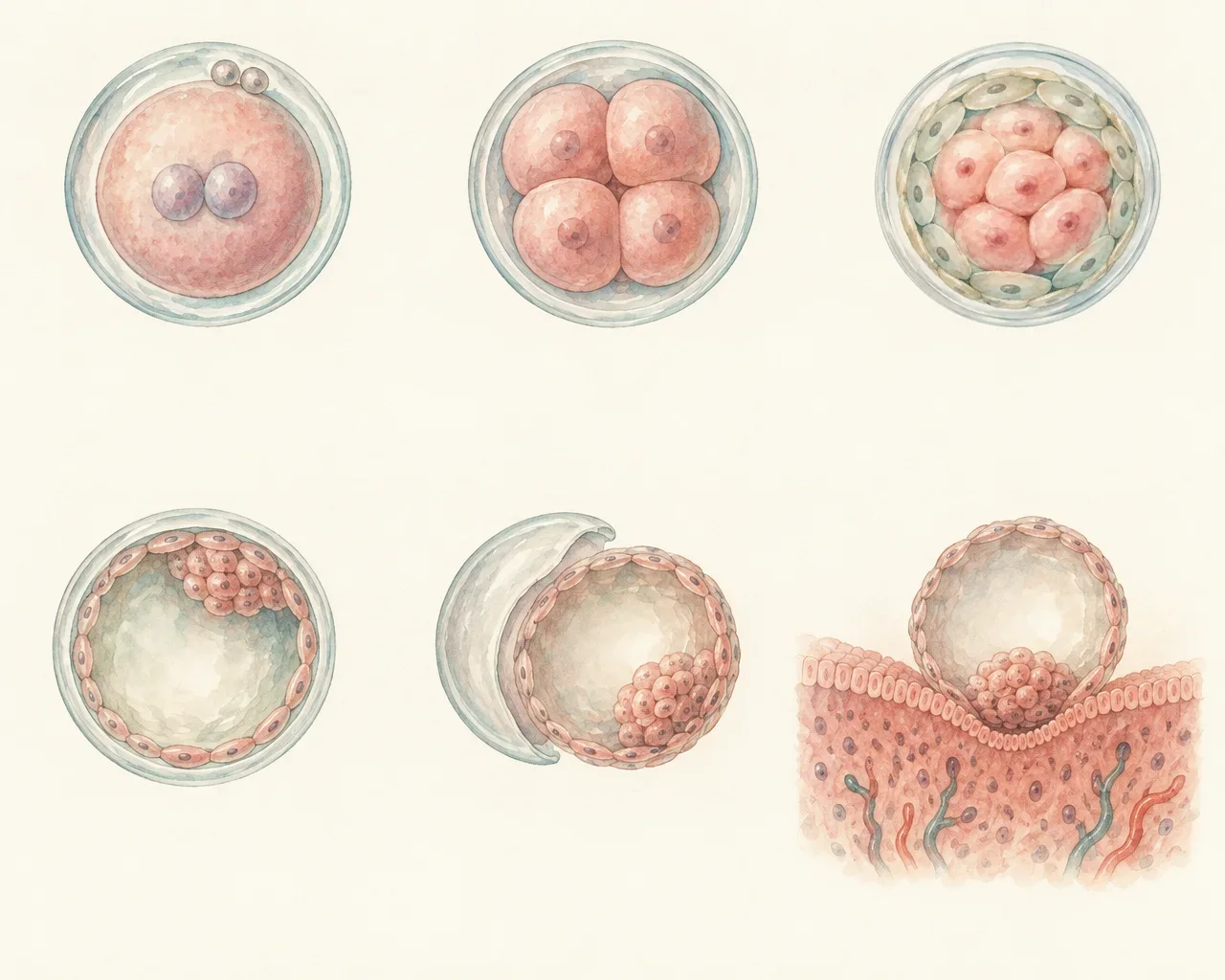
- Lesson 2.3 · 4 min Start hereRead Weeks 1 and 2: from fertilisation to implantation How one cell becomes a hollow ball of about a hundred cells and then settles into the lining of the uterus.
- Lesson 2.4 · 4 min Start hereRead Weeks 3 to 8: building the body plan How a flat disc of cells becomes an embryo with a beating heart, a brain and limbs in six weeks.
- Lesson 2.5 · 4 min Start hereRead Week 9 to birth: growing and getting ready What changes in the long fetal period, why the lungs come last, and how much the length of a healthy pregnancy varies.

Learning aims
By the end of this module you will be able to:
- Describe the main stages of development in order, from eggs and sperm to birth.
- Explain the difference between weeks after fertilisation and weeks of pregnancy, and convert one into the other.
- Recognise what happens in the first two weeks, including when implantation usually begins.
- Explain what the embryonic period is, and name the three germ layers and what they form.
- Compare the embryonic period with the fetal period, and explain why the length of a healthy pregnancy varies.
The module in brief
The module in brief
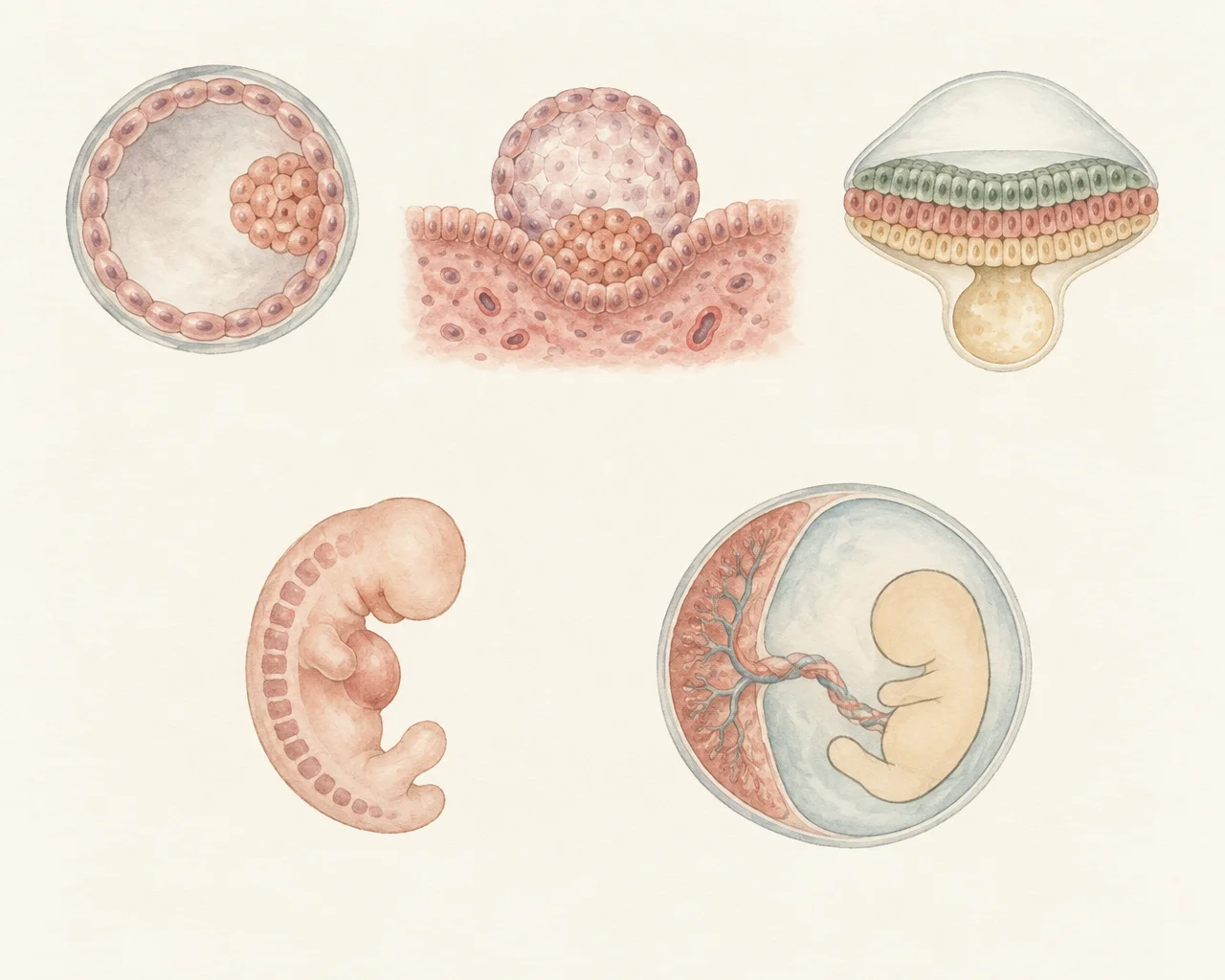
- Development runs from eggs and sperm, made by meiosis, through fertilisation, the first week, implantation, the embryonic period and the fetal period to birth.
- Embryology counts weeks after fertilisation; pregnancy care counts from the first day of the last period, which runs about two weeks ahead.
- By about day 5 after fertilisation the embryo is a blastocyst; implantation usually begins around day 6 to 7, and hCG is first detectable 6 to 12 days after ovulation, most often on day 8 to 10.
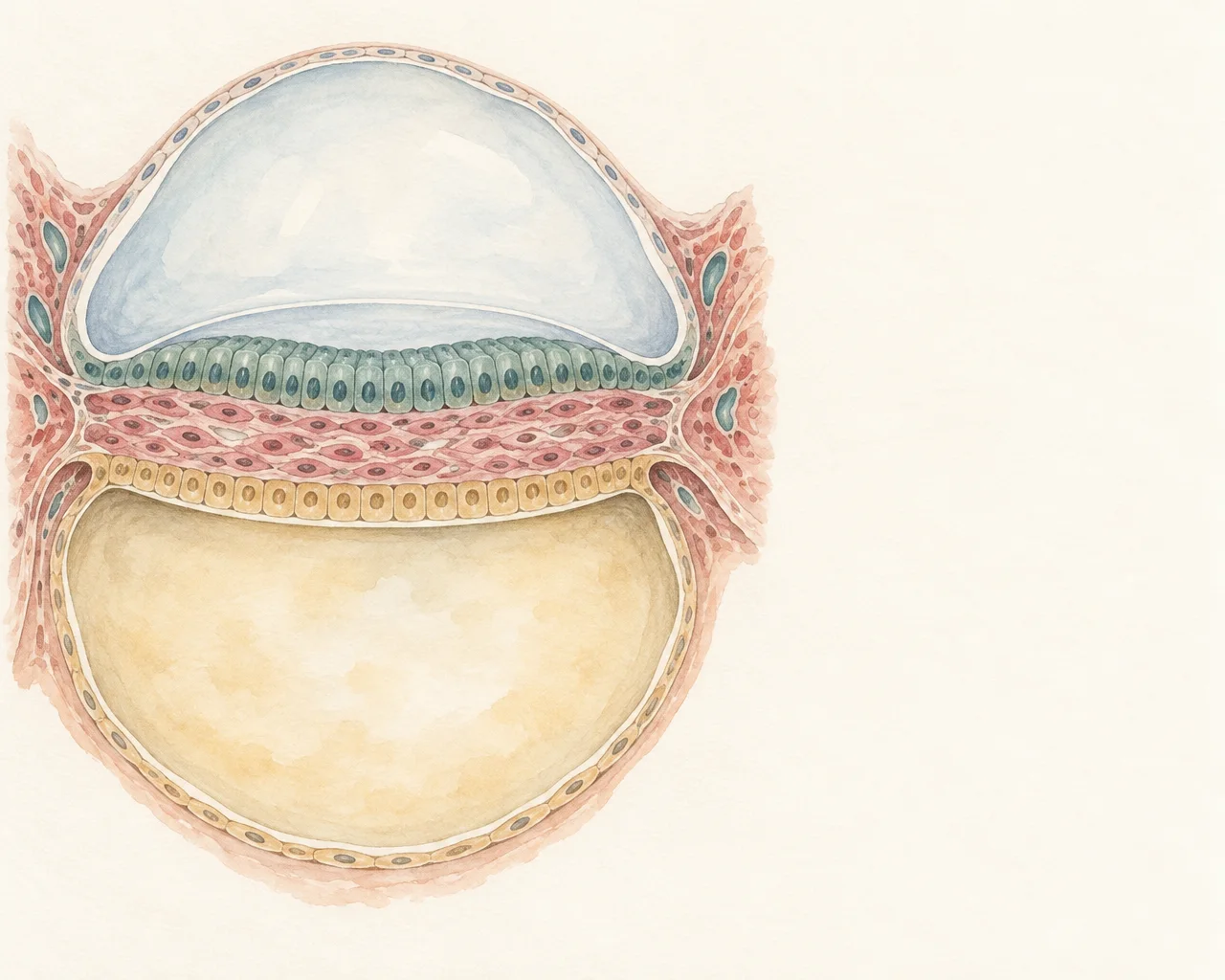
- In week 3 after fertilisation the embryo forms three germ layers: ectoderm, mesoderm and endoderm.
- The embryonic period is the first 8 weeks after fertilisation, when every major organ system begins; the heart starts to beat at around day 22.
- From week 9 the developing baby is a fetus, and the rest of pregnancy is mostly growth and maturing, with the lungs among the last organs to be ready.
- Birth comes at about 38 weeks after fertilisation (40 weeks of pregnancy), and healthy pregnancies vary in length by several weeks.