
Module 11
When chromosomes and genes change
Chromosomes and genes carry the instructions for development, and sometimes those instructions change. This module explains how, why it so often has nothing to do with anything you did, and how far genetic testing of embryos can go.
- 5lessons
- 20 minreading
- 6quiz questions
The lessons and the quiz in this module are part of the Fertility with Kara Package. Module 1 is free to read.
Your way through Module 11
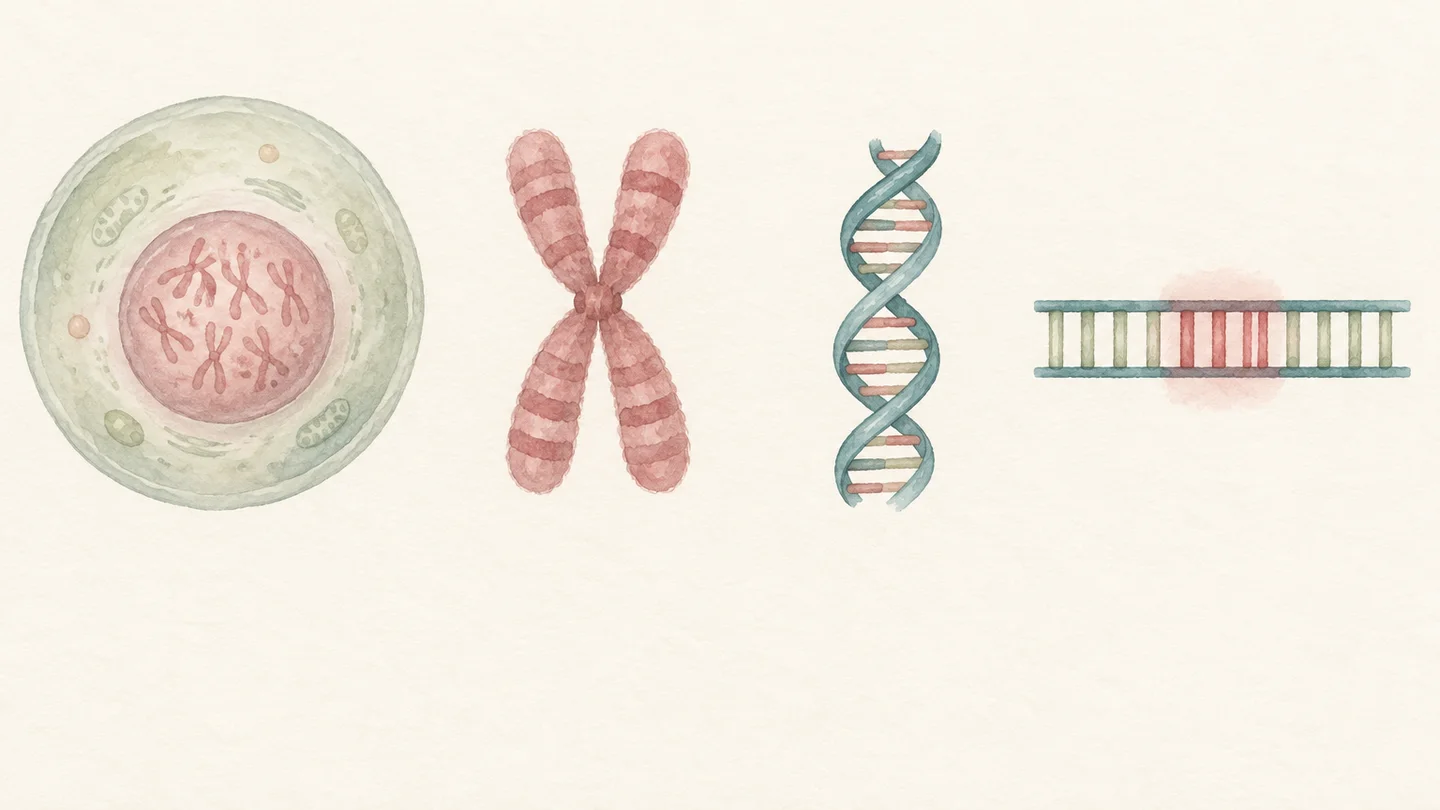
- Lesson 11.1 · 4 min Start hereRead Chromosomes 101 What chromosomes and genes are, how they come in pairs, and how a karyotype shows them.
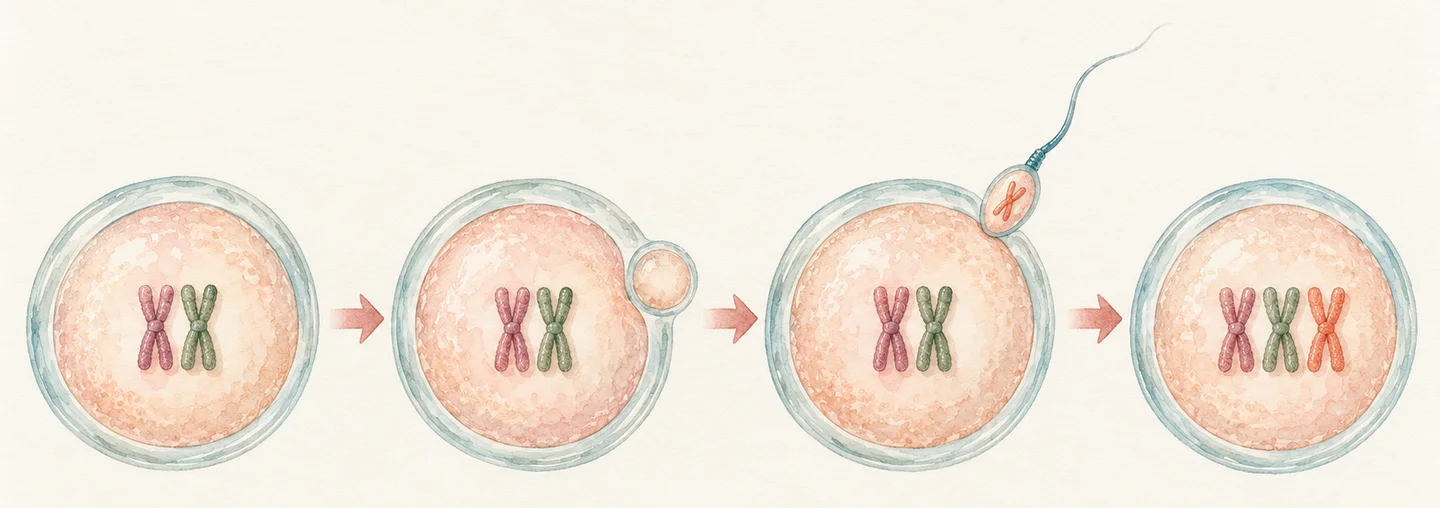
- Lesson 11.2 · 4 min Start hereRead When the count changes, and why miscarriage is so often chromosomal How an egg or sperm can end up with the wrong number of chromosomes, why this becomes more common with age, and why it explains so many early miscarriages.
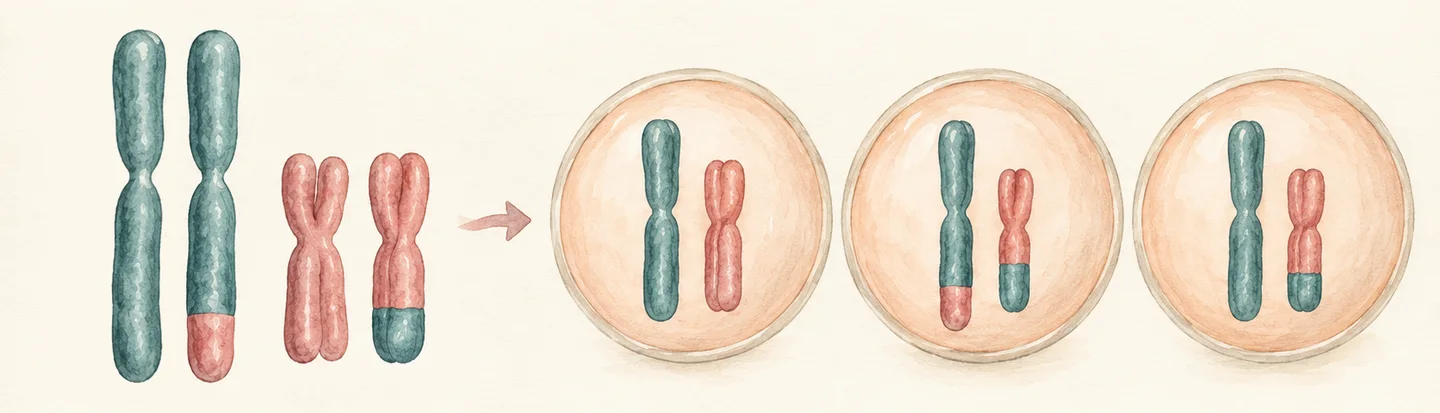
- Lesson 11.3 · 4 min Start hereRead Chromosome conditions at birth, rearrangements and mosaicism The chromosome changes that can be present in babies who are born, what a balanced rearrangement is, and what it means when only some cells are affected.
- Lesson 11.4 · 4 min Start hereRead Single-gene conditions and carrier screening How conditions caused by a change in one gene are passed on, and what carrier screening shows a couple before or during pregnancy.
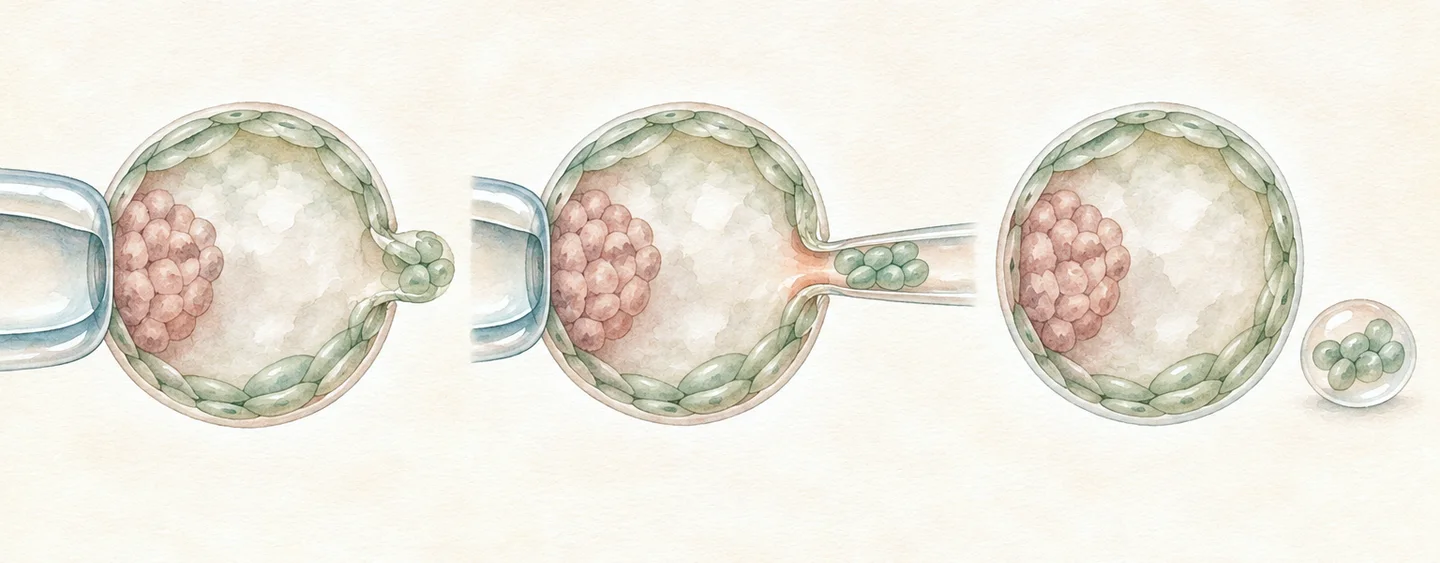
- Lesson 11.5 · 4 min Start hereRead Testing embryos: PGT-M, PGT-SR and PGT-A How embryos are tested during IVF, when testing has a clear purpose, and what the evidence says about checking chromosome numbers routinely.


Learning aims
By the end of this module you will be able to:
- Describe how 46 chromosomes are arranged in 23 pairs, and read a simple karyotype such as 47,XY,+21.
- Explain how an extra or missing chromosome arises during meiosis, and why this becomes more common with a woman's age.
- Explain why about half of early miscarriages are chromosomal, and why they are not caused by anything either partner did.
- Recognise the common trisomies, sex chromosome differences, balanced translocations and mosaicism.
- Compare dominant, recessive and X-linked inheritance, and describe what carrier screening offers.
- Compare PGT-M, PGT-SR and PGT-A, and ask informed questions about PGT-A.
The module in brief
The module in brief
- Most cells hold 46 chromosomes in 23 pairs: 22 numbered pairs and the sex chromosomes, with one of each pair from each parent.
- If a chromosome pair fails to separate when an egg or sperm forms, the embryo can have an extra or a missing chromosome.
- As women get older, a larger share of eggs and embryos have the wrong number of chromosomes, the main reason age affects fertility.
- About half of early miscarriages show a chromosome change that arose by chance; they are not anyone's fault.
- Down syndrome (trisomy 21) is the most common extra numbered chromosome in babies who are born; trisomies 18 and 13 are rarer and more serious.
- Balanced translocation carriers are usually healthy but can have more miscarriages; mosaicism means a mix of cells with different chromosomes.
- Two carriers of the same recessive gene change have a 1 in 4 chance of an affected child in each pregnancy, and carrier screening can show this beforehand.
- PGT-M and PGT-SR help couples with a known genetic risk; PGT-A has not been shown to increase the chance of a baby and is not recommended routinely.