
Module 03
Making eggs and sperm
How the body makes eggs and sperm: meiosis in plain words, the long life of a follicle, the sperm production line, the hormones behind both, and what age changes.
- 5lessons
- 23 minreading
- 6quiz questions
The lessons and the quiz in this module are part of the Fertility with Kara Package. Module 1 is free to read.
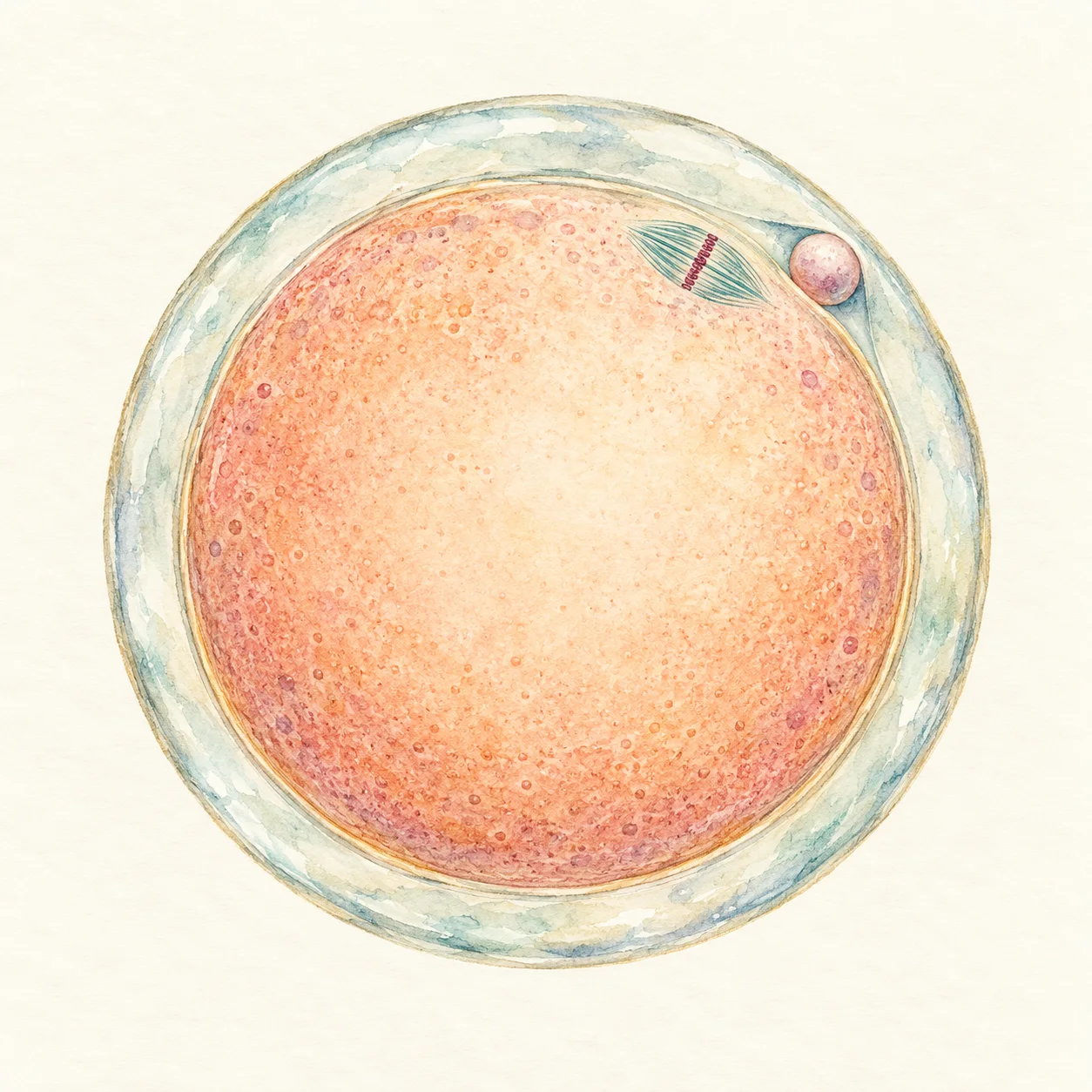
Your way through Module 03
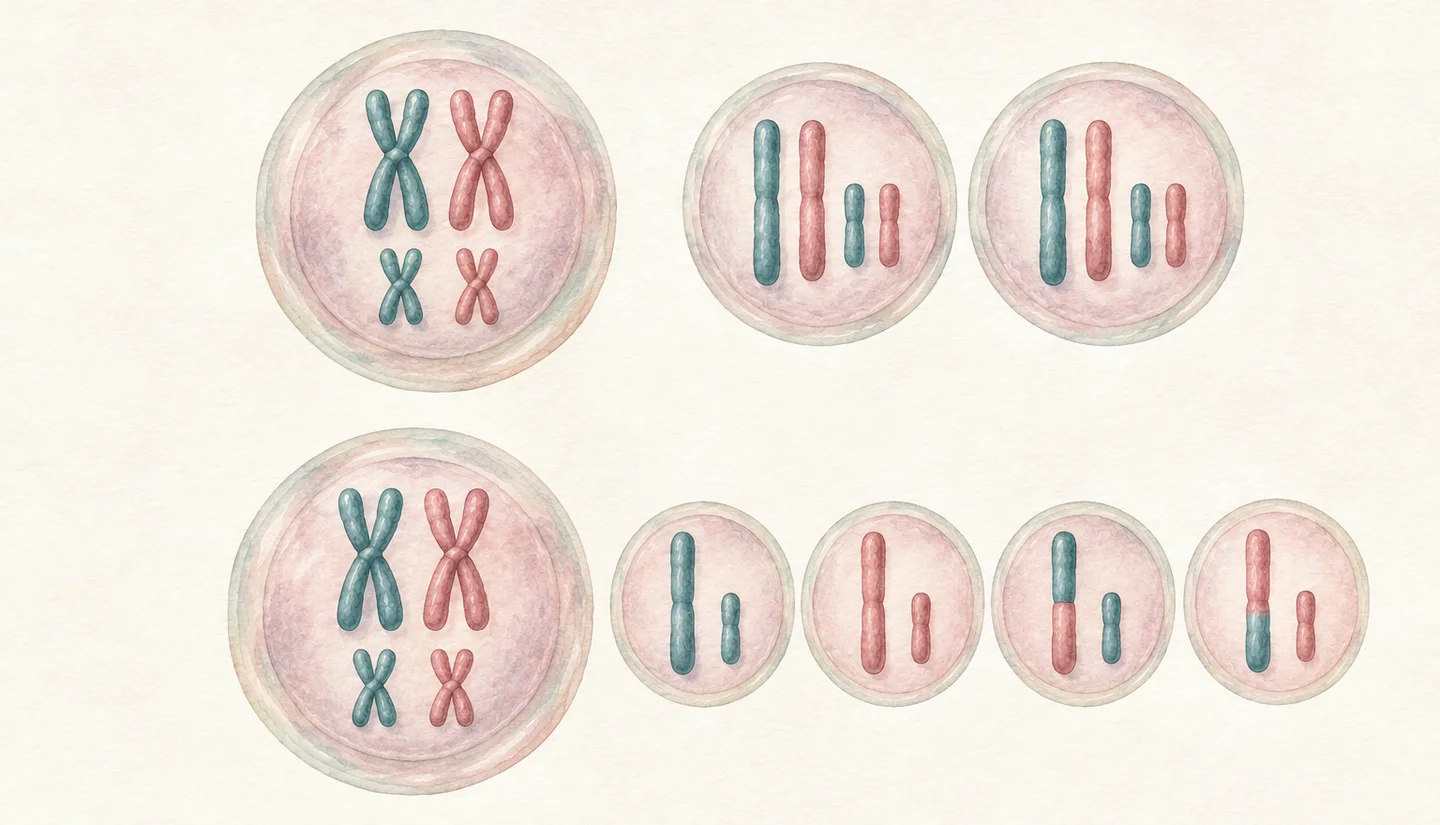
- Lesson 3.1 · 4 min Start hereRead Meiosis, explained simply How eggs and sperm end up with exactly half a set of chromosomes, and why no two of them are alike.
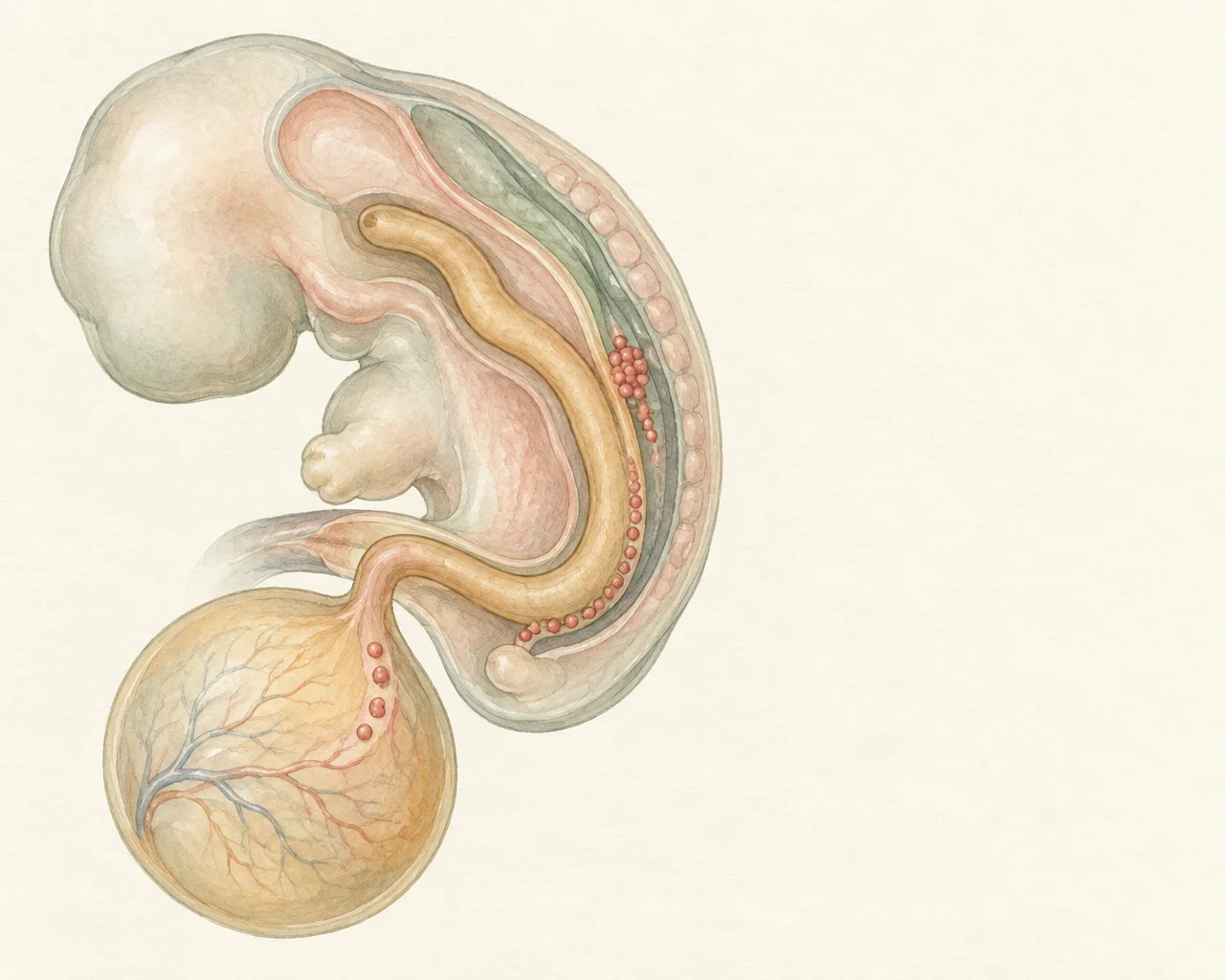
- Lesson 3.2 · 4 min Start hereRead Where eggs and sperm begin How the cells that become eggs and sperm are set aside in the first weeks of life, and why a woman's eggs are as old as she is.
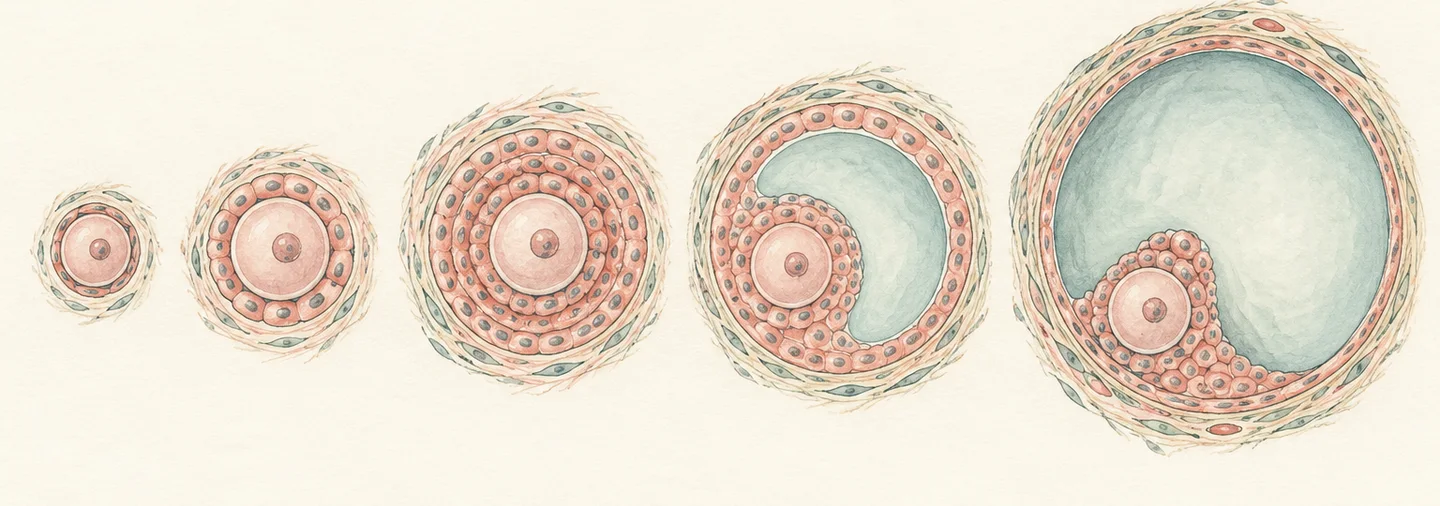
- Lesson 3.3 · 5 min Start hereRead From follicle to egg How a resting follicle wakes up, grows for months, and releases one egg, and which hormones run the process.
- Lesson 3.4 · 5 min Start hereRead Making sperm How the testes turn stem cells into sperm in about two to three months, and the hormones that keep the production line running.
- Lesson 3.5 · 5 min Start hereRead How age affects eggs and sperm Why a woman's age matters so much for her eggs, why a man's age matters less but still a little, and what egg quality means.

Learning aims
By the end of this module you will be able to:
- Explain how meiosis halves the number of chromosomes and makes every egg and sperm genetically unique.
- Describe where eggs and sperm come from, and why a woman's eggs are formed before she is born.
- Describe the stages of follicle growth and what the LH surge does to the egg.
- Describe how sperm are made in the testes, how long it takes, and which hormones control it.
- Compare how age affects eggs and sperm, and explain the difference between egg quantity and egg quality.
The module in brief
The module in brief
- Meiosis uses two divisions to give each egg and sperm 23 chromosomes, one from each pair, newly mixed by crossing over.
- Eggs and sperm both come from primordial germ cells set aside in the first weeks after fertilisation.
- A woman's eggs are formed before birth and wait, paused in meiosis, inside resting follicles whose number falls steadily with age.
- A follicle grows for months; in each cycle usually one becomes dominant, and the LH surge restarts meiosis and triggers ovulation.
- Sperm are made continuously from stem cells in the testes, a process of about two to three months controlled by FSH, LH and testosterone made inside the testes.
- Testosterone taken from outside the body switches off sperm production.
- With age, eggs become fewer and more often carry the wrong number of chromosomes; sperm change more gradually.