
Module 13
Muscles, bones and limbs
How blocks of tissue along the embryo's back become the spine and muscles, how cartilage turns into bone, and how arms, legs, fingers and toes take shape.
- 3lessons
- 9 minreading
- 6quiz questions
The lessons and the quiz in this module are part of the Fertility with Kara Package. Module 1 is free to read.
Your way through Module 13
- Lesson 13.1 · 3 min Start hereRead Somites and muscles How blocks of tissue along the embryo's back become the spine, the muscles and the skin of the back, and how a muscle fibre is built.
- Lesson 13.2 · 3 min Start hereRead How bones form The two ways bone is made, why most of the skeleton starts as cartilage, and why babies are born with soft spots and growth plates.
- Lesson 13.3 · 3 min Start hereRead Limbs, fingers and toes How arms and legs grow from small buds, how fingers come apart, and the common limb differences, explained gently.

Learning aims
By the end of this module you will be able to:
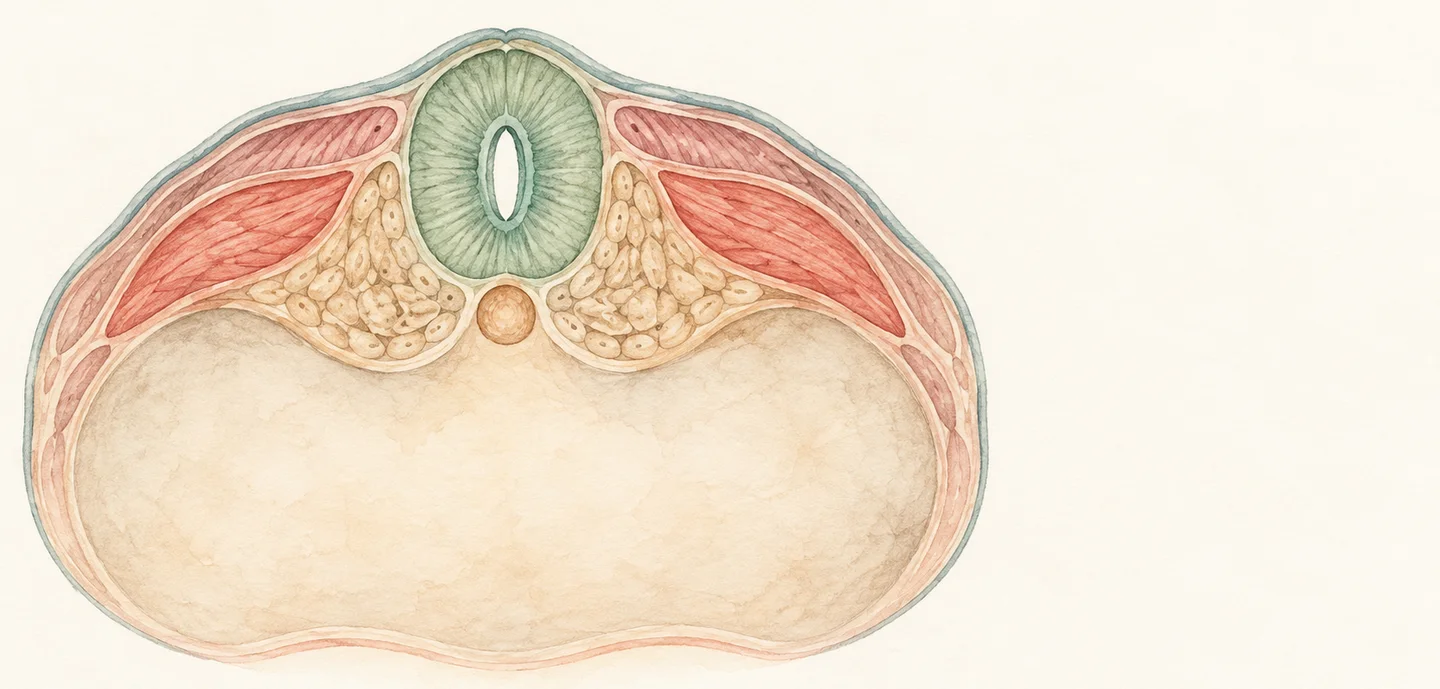
- Describe what somites are and what their three parts become.
- Explain how skeletal muscle fibres form from many fused cells.
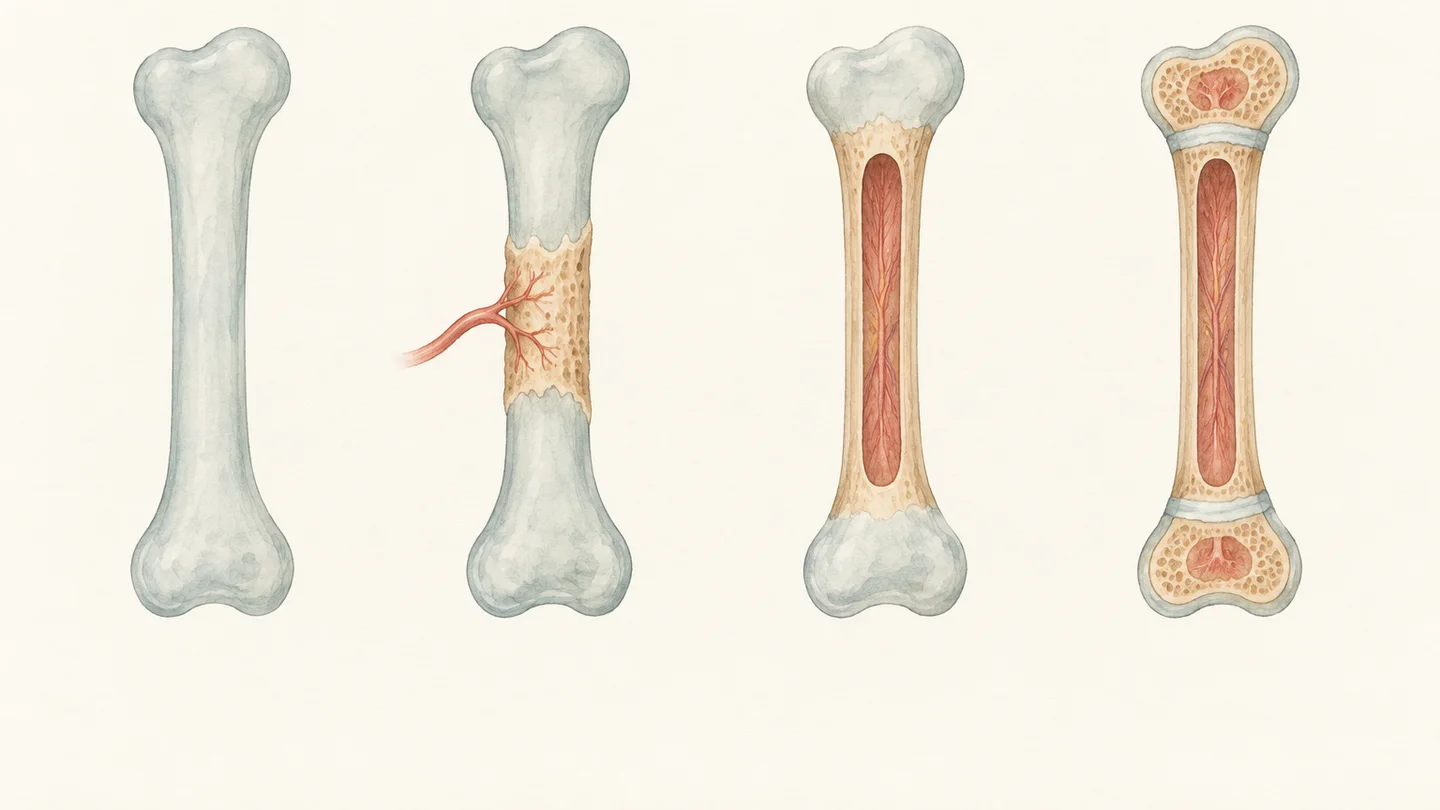
- Compare the two ways the body makes bone, and explain what growth plates and fontanelles do.
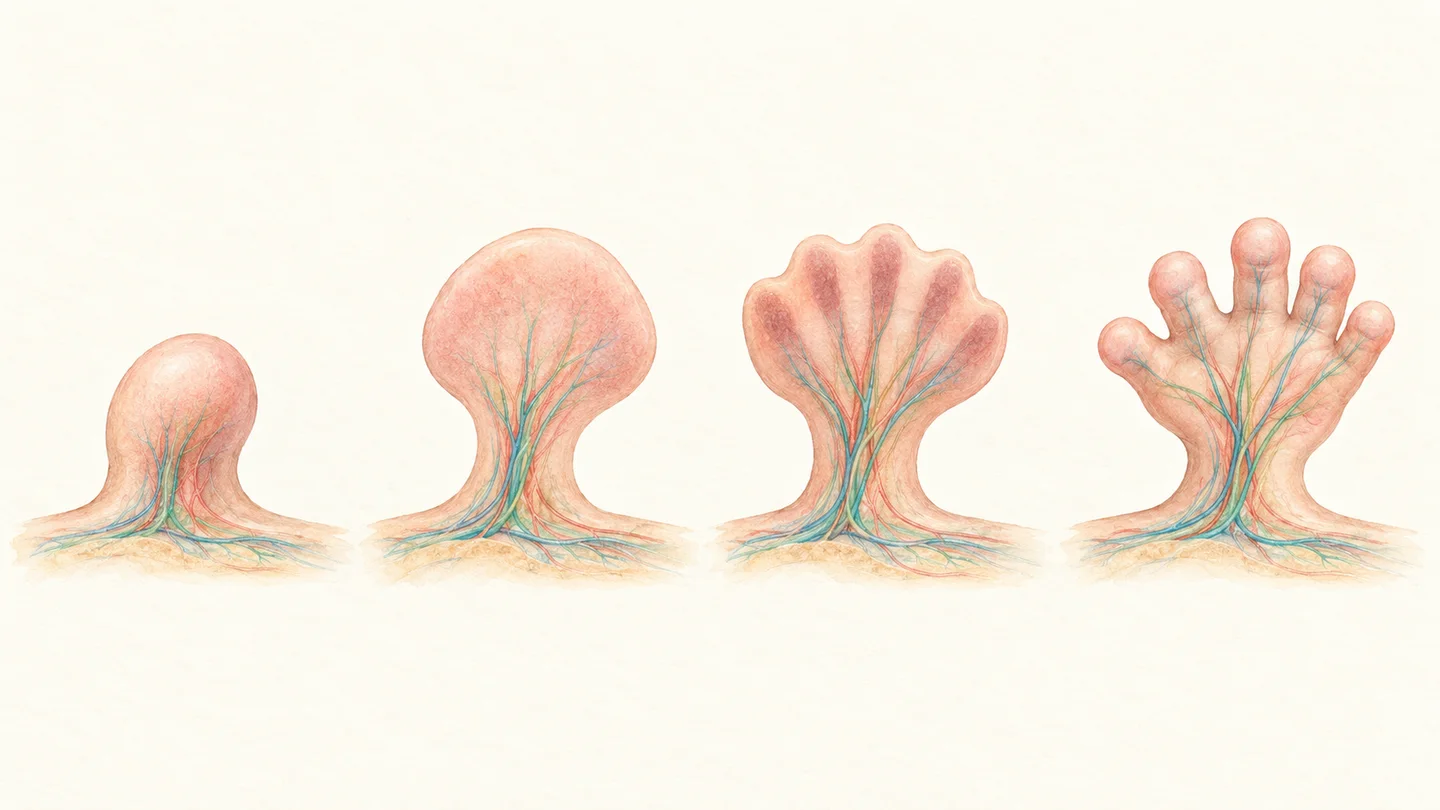
- Describe how a limb bud becomes a hand with separate fingers.
- Recognise the common limb differences and explain them in simple, factual terms.
The module in brief
The module in brief
- Somites are paired blocks of mesoderm along the back; the first appear at about day 20 after fertilisation and there are 42 to 44 pairs by the end of week 5.
- Each somite splits into sclerotome (vertebrae and ribs), myotome (skeletal muscle) and dermatome (deep skin of the back).
- A skeletal muscle fibre forms when many myoblasts fuse into one long cell with many nuclei.
- Most bones start as cartilage models that bone replaces from the middle outwards; the flat bones of the skull form directly from membranes.
- Growth plates keep bones lengthening until after puberty, and fontanelles let the skull mould at birth and grow with the brain.
- Limb buds appear towards the end of week 4 after fertilisation, and the fingers are separate by the end of week 8 through programmed cell death.
- Extra, joined or missing fingers and toes, clubfoot and limb reduction differences are described factually; many have no known cause and none is anyone's fault.