
Module 04
Fertilisation
How an egg and a sperm find each other in the fallopian tube, how one sperm gets inside, and what an embryologist looks for the morning after.
- 5lessons
- 20 minreading
- 6quiz questions
The lessons and the quiz in this module are part of the Fertility with Kara Package. Module 1 is free to read.
Your way through Module 04
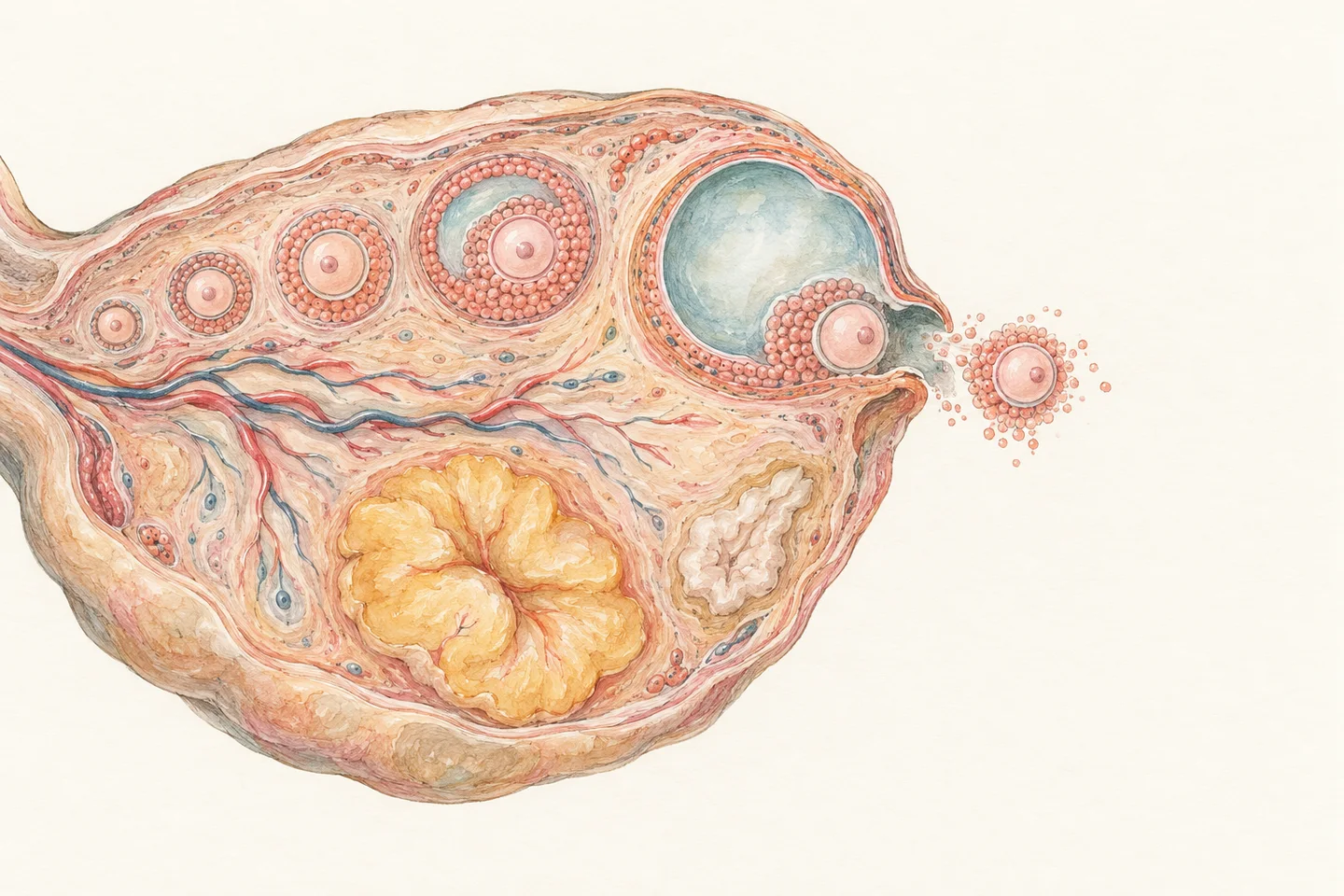
- Lesson 4.1 · 4 min Start hereRead Ovulation and the tube How a mature egg leaves the ovary, how the fallopian tube catches it, and why it has only about a day to meet a sperm.
- Lesson 4.2 · 4 min Start hereRead The fertile window Why there are about six fertile days in each cycle, and which of them give the best chance.
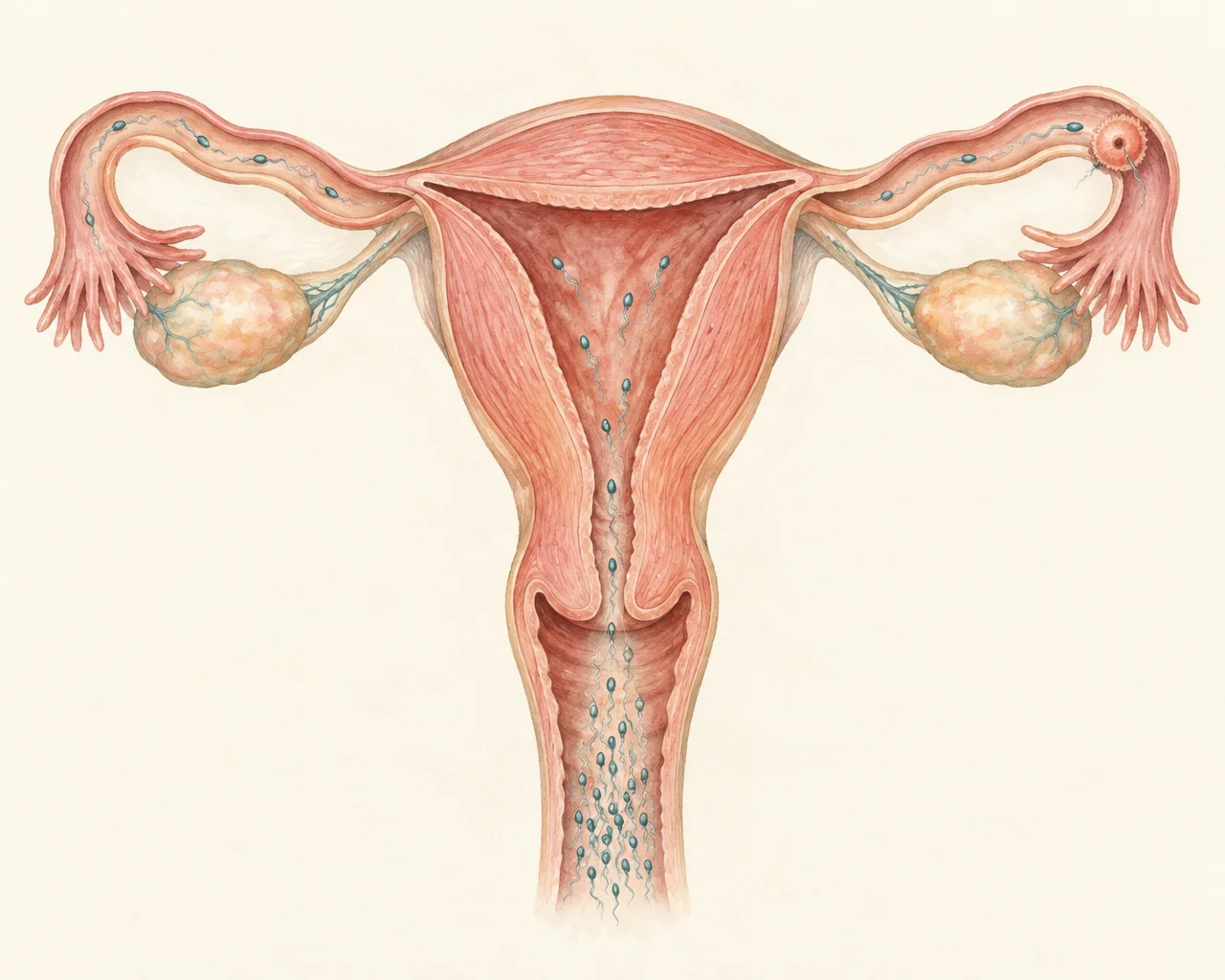
- Lesson 4.3 · 4 min Start hereRead The sperm's path and capacitation How tens of millions of sperm become a few thousand in the tubes, and the final change sperm must go through before they can fertilise an egg.
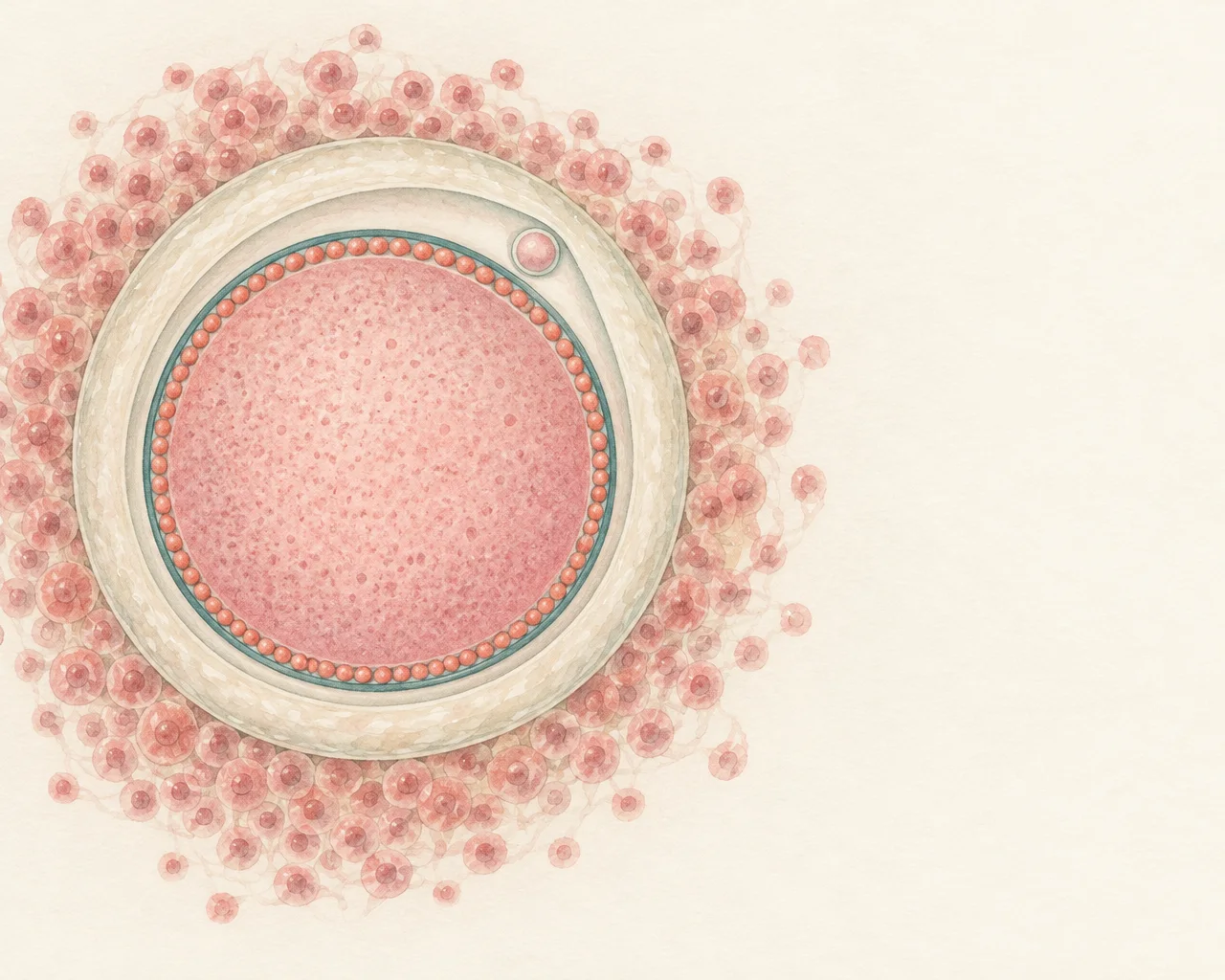
- Lesson 4.4 · 4 min Start hereRead Meeting the egg How a sperm gets through the egg's three layers, how the egg lets in only one, and what changes inside the egg the moment it does.
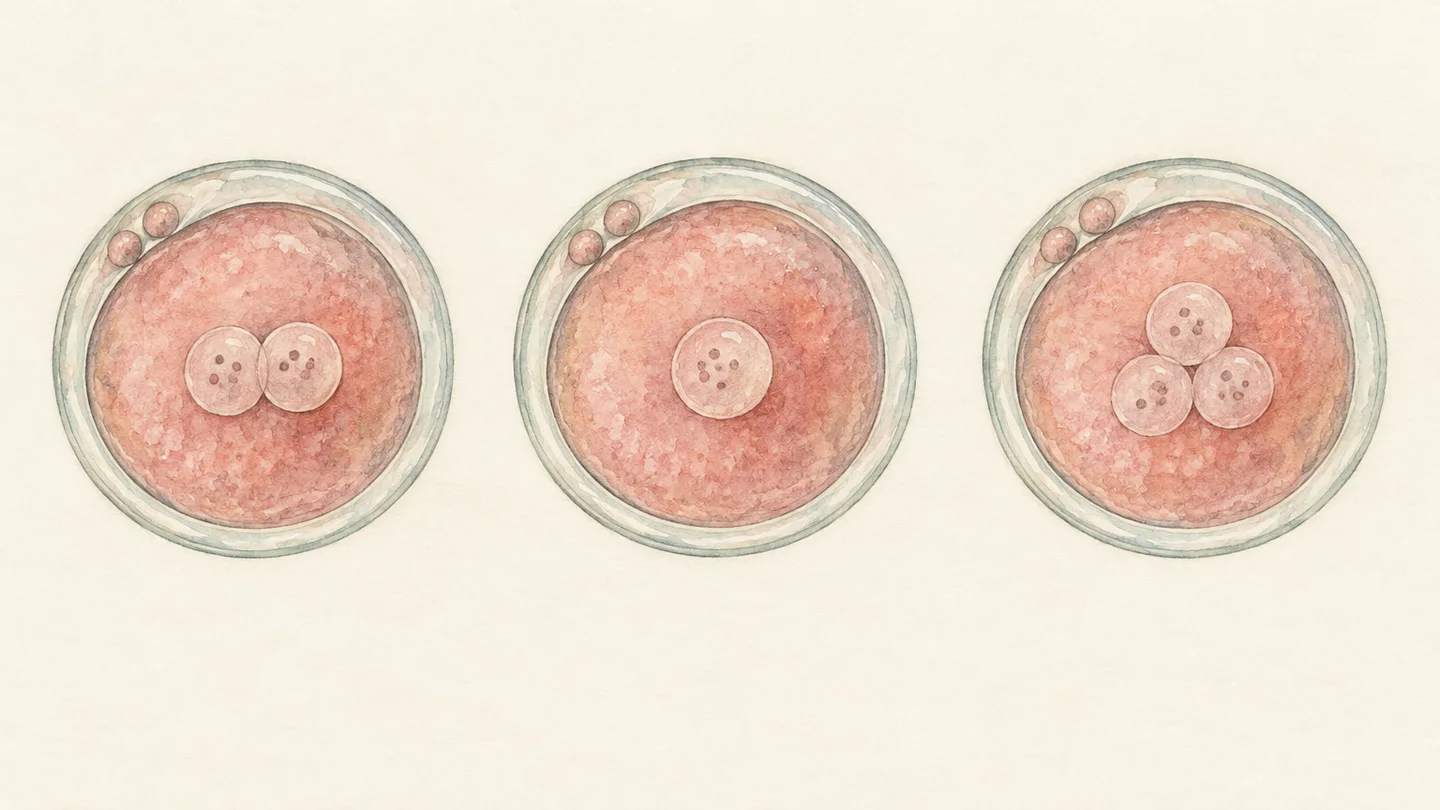
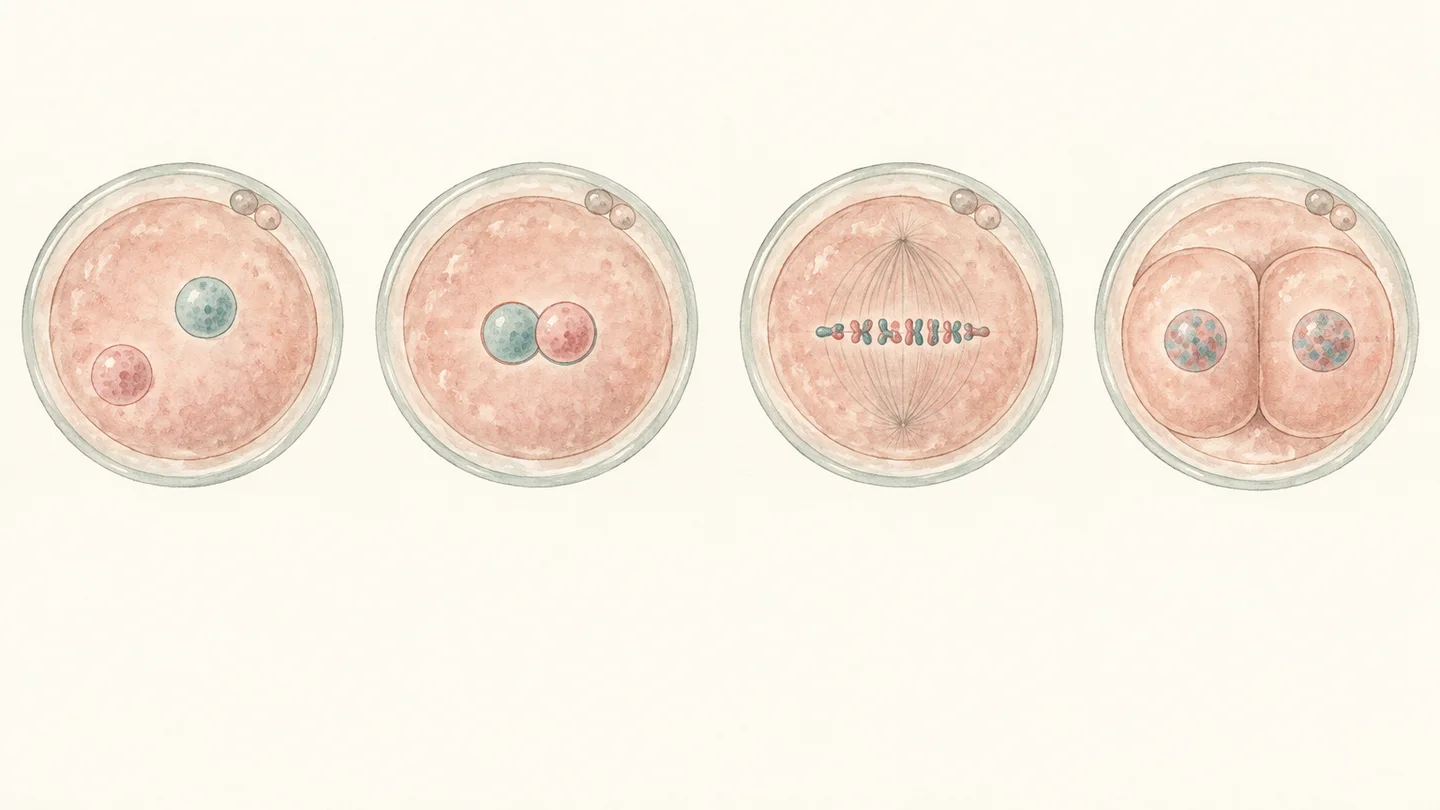
- Lesson 4.5 · 4 min Start hereRead Pronuclei and the fertilisation check How the egg's and sperm's chromosomes come together in the zygote, and what an embryologist looks for on the morning after egg collection.

Learning aims
By the end of this module you will be able to:
- Describe how the LH surge matures and releases the egg, and how the fallopian tube catches it.
- Explain why the fertile window is about six days long and ends on the day of ovulation.
- Describe the path sperm take through the female tract, and what capacitation does to them.
- Explain how one sperm crosses the egg's layers and how the egg keeps other sperm out.
- Recognise normal and abnormal fertilisation at the day 1 check, and ask informed questions about your own results.
The module in brief
The module in brief
- The LH surge finishes maturing the egg and releases it; the fimbriae sweep it into the fallopian tube, where fertilisation usually happens in the wide ampulla.
- The egg can be fertilised for an estimated 12 to 24 hours, but sperm can wait in the tubes for several days.
- The fertile window is about six days long and ends on the day of ovulation; regular sex every 2 to 3 days covers it without tracking.
- Tens of millions of sperm are released, but only a few thousand reach the tubes, and they must be capacitated before they can fertilise an egg.
- A sperm crosses the cumulus and the zona pellucida, using the enzymes in its acrosome, then fuses with the egg through a matching pair of proteins.
- Once one sperm is in, the egg changes its membrane and shell to keep other sperm out, and finishes its own second division.
- About 16 to 17 hours after insemination, a normally fertilised egg shows two pronuclei and two polar bodies; three pronuclei are abnormal, and one pronucleus is an unclear result.
- Not every egg is mature and not every mature egg fertilises, so having fewer zygotes than eggs is expected, and abnormal fertilisation is nobody's fault.