
Module 06
Implantation
How the blastocyst finds a receptive lining, attaches and burrows in, why hCG appears when it does, and what happens when an early pregnancy does not continue.
- 4lessons
- 18 minreading
- 6quiz questions
The lessons and the quiz in this module are part of the Fertility with Kara Package. Module 1 is free to read.
Your way through Module 06
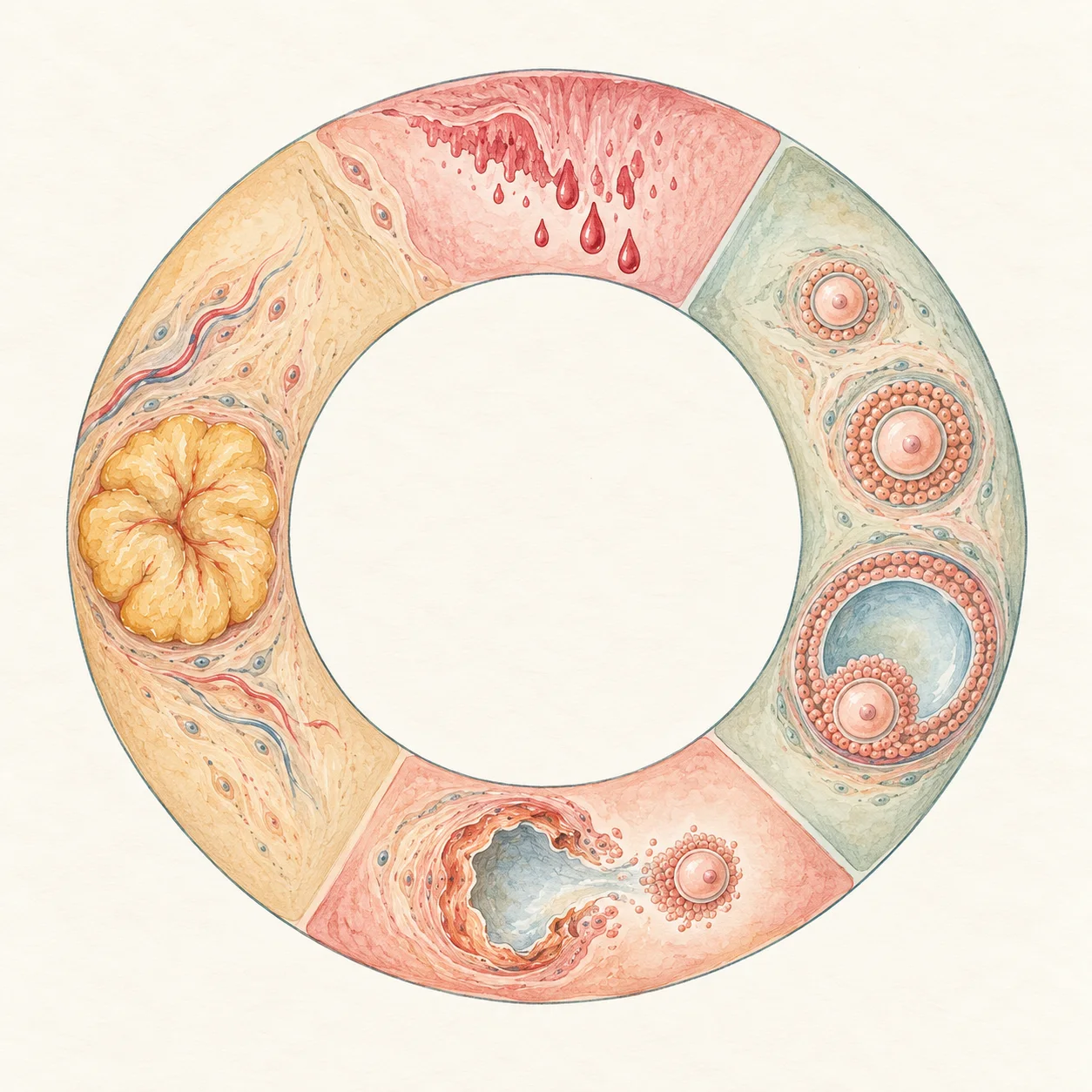
- Lesson 6.1 · 5 min Start hereRead A lining ready to receive How the lining of the uterus grows each month, how progesterone changes it, and why it is open to an embryo for only a few days.
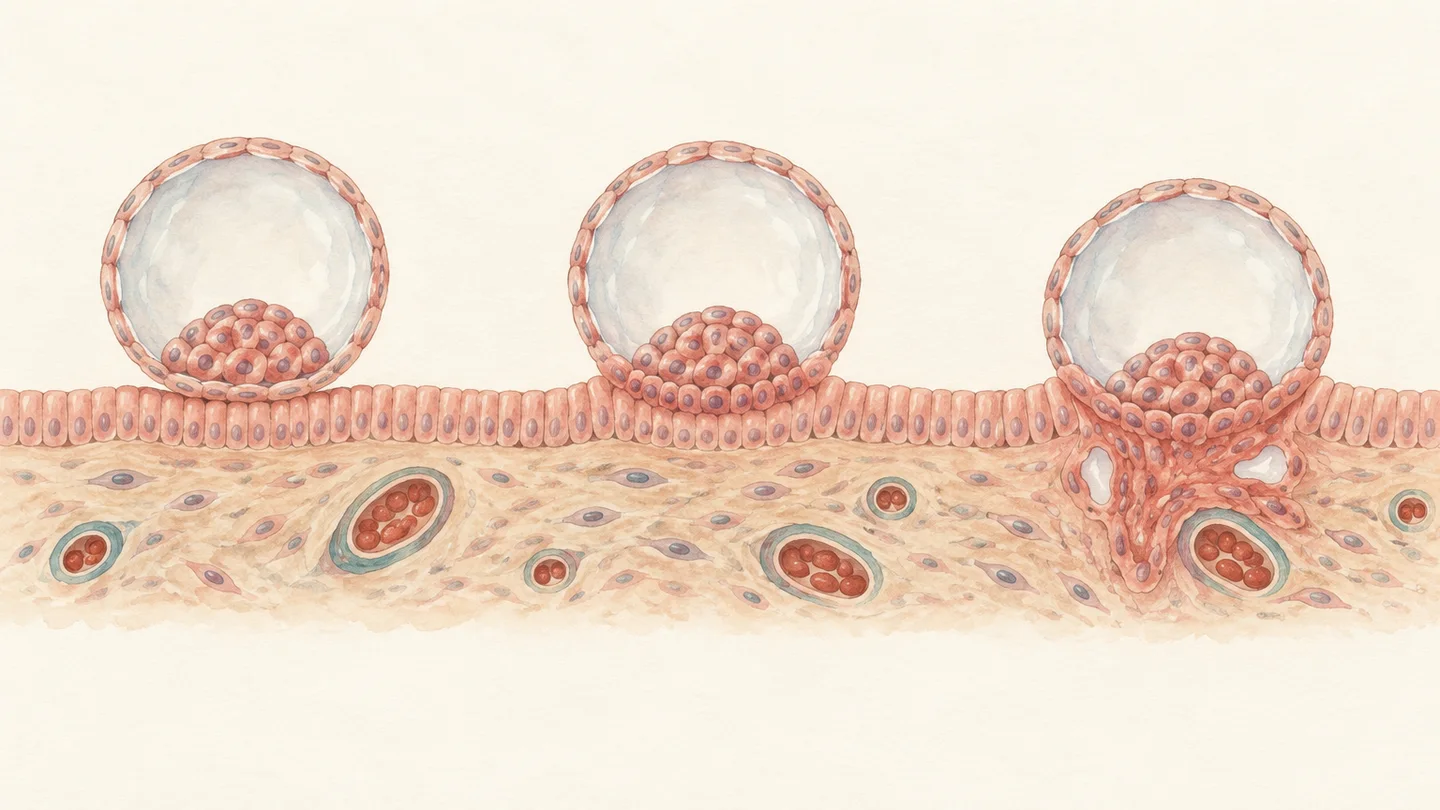
- Lesson 6.2 · 4 min Start hereRead How the embryo attaches and burrows in The three steps of implantation, from a loose first touch to an embryo buried in the lining and tapping into its mother's blood supply.
- Lesson 6.3 · 5 min Start hereRead hCG and when a pregnancy test turns positive What hCG does, why it cannot appear before implantation, and why a test on the day your period is due can still be too early.
- Lesson 6.4 · 4 min Start hereRead When an early pregnancy does not continue Biochemical pregnancy, early miscarriage and ectopic pregnancy explained gently, with the warning signs that need urgent care.


Learning aims
By the end of this module you will be able to:
- Describe how oestrogen and progesterone prepare the lining of the uterus, and what the window of implantation is.
- Explain the three steps of implantation: apposition, adhesion and invasion.
- Explain where hCG comes from and why a pregnancy test cannot be positive before implantation.
- Recognise the warning signs of an ectopic pregnancy and know when to seek urgent care.
- Describe a biochemical pregnancy and early miscarriage in plain, accurate terms.
- Ask your clinic how your lining is prepared and how transfer and testing are timed.
The module in brief
The module in brief
- Oestrogen rebuilds the lining of the uterus after each period, and progesterone from the corpus luteum then makes it receptive.
- The lining accepts an embryo for only about 3 to 6 days in each cycle, the window of implantation.
- Implantation has three steps: loose contact, firm attachment, and invasion by the syncytiotrophoblast, which buries the embryo in the lining by about day 12 after fertilisation.
- hCG is made by the implanting embryo, first appears 6 to 12 days after ovulation, and keeps progesterone and the lining in place.
- About 1 in 10 pregnancies has not yet implanted on the day a period is due, so an early negative test is not the final answer.
- Very early losses and miscarriages are common, often caused by a chromosome difference in the embryo, and very rarely anyone's fault.
- Pain or bleeding with a positive pregnancy test needs prompt care, because it can be a sign of an ectopic pregnancy.