
Module 22
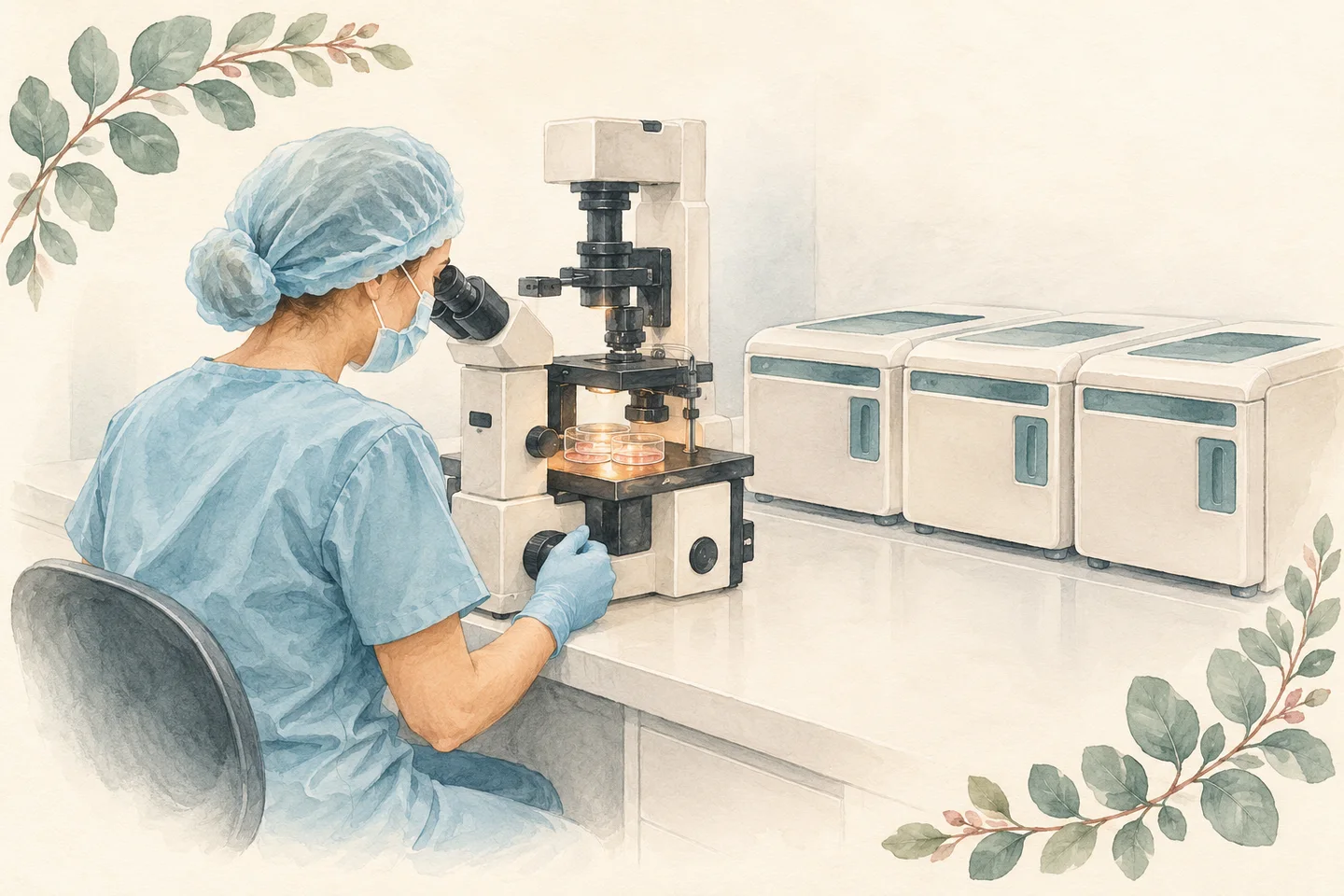
Inside the IVF lab
Step through the door of the embryology laboratory: how your eggs are found and checked, how they are fertilised, how embryos grow and are frozen, and what happens on transfer day.
- 4lessons
- 18 minreading
- 6quiz questions
The lessons and the quiz in this module are part of the Fertility with Kara Package. Module 1 is free to read.
Your way through Module 22
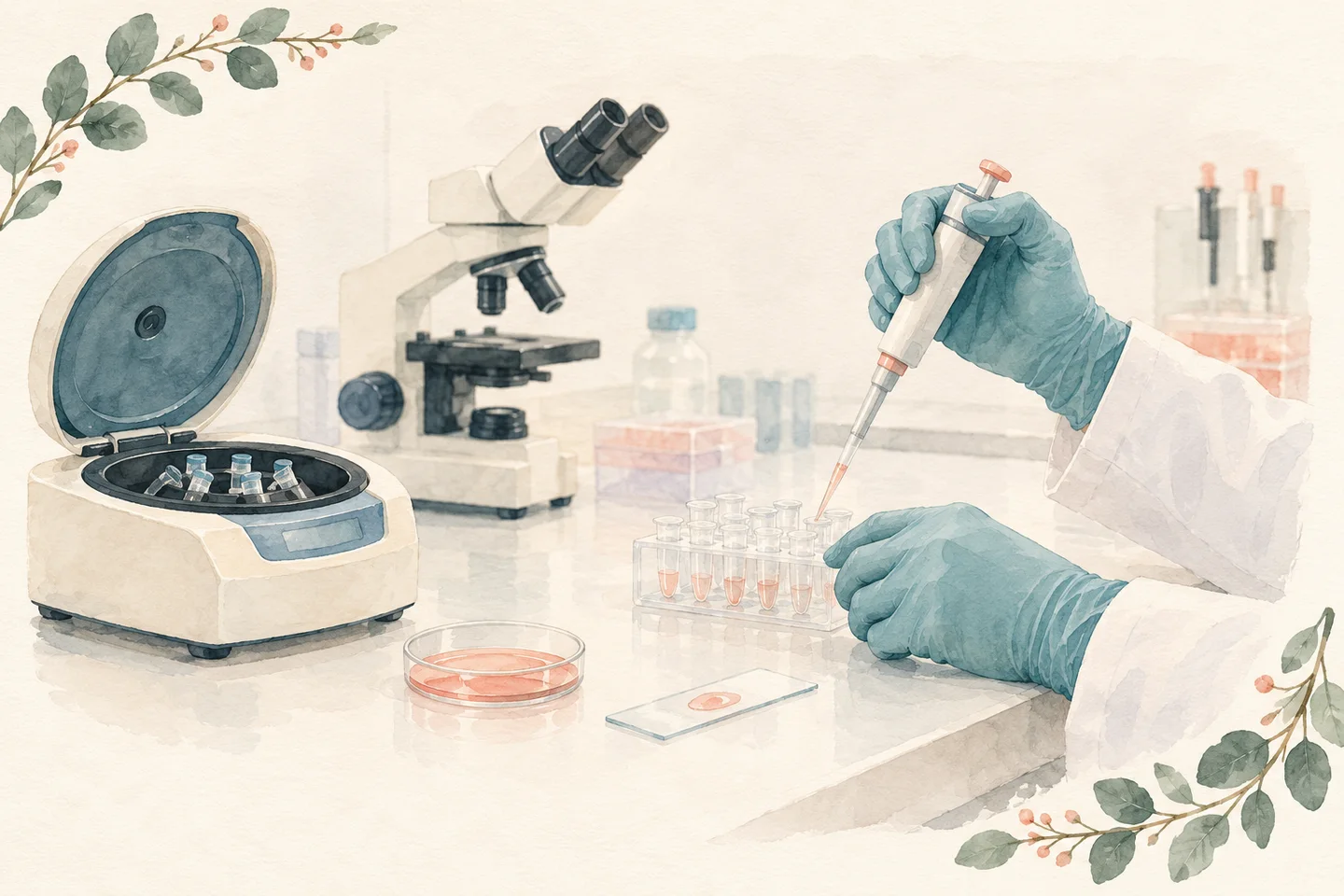
- Lesson 22.1 · 5 min Start hereRead Behind the laboratory door What an embryology laboratory is, how its incubators copy the inside of the body, and how every egg and embryo is kept safe and correctly named.
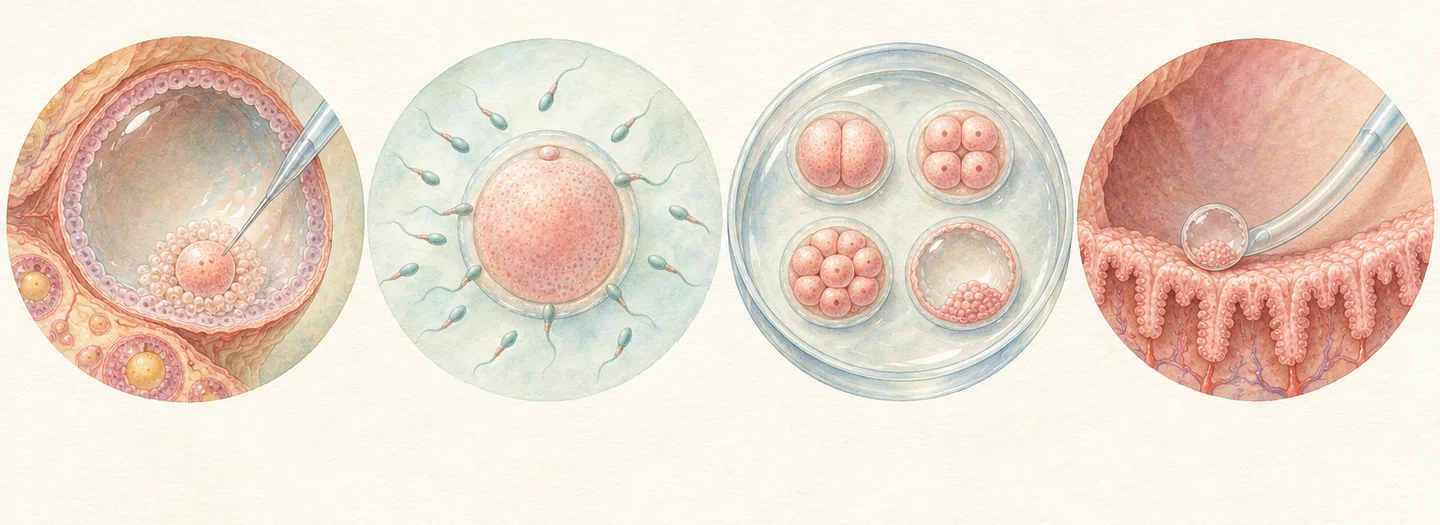
- Lesson 22.2 · 4 min Start hereRead Egg collection day How the lab finds your eggs, why they are cleaned of their helper cells, and why not every egg collected is mature.
- Lesson 22.3 · 5 min Start hereRead IVF or ICSI, and the morning after The two ways the lab brings eggs and sperm together, when ICSI helps, and what the fertilisation check the next morning looks for.
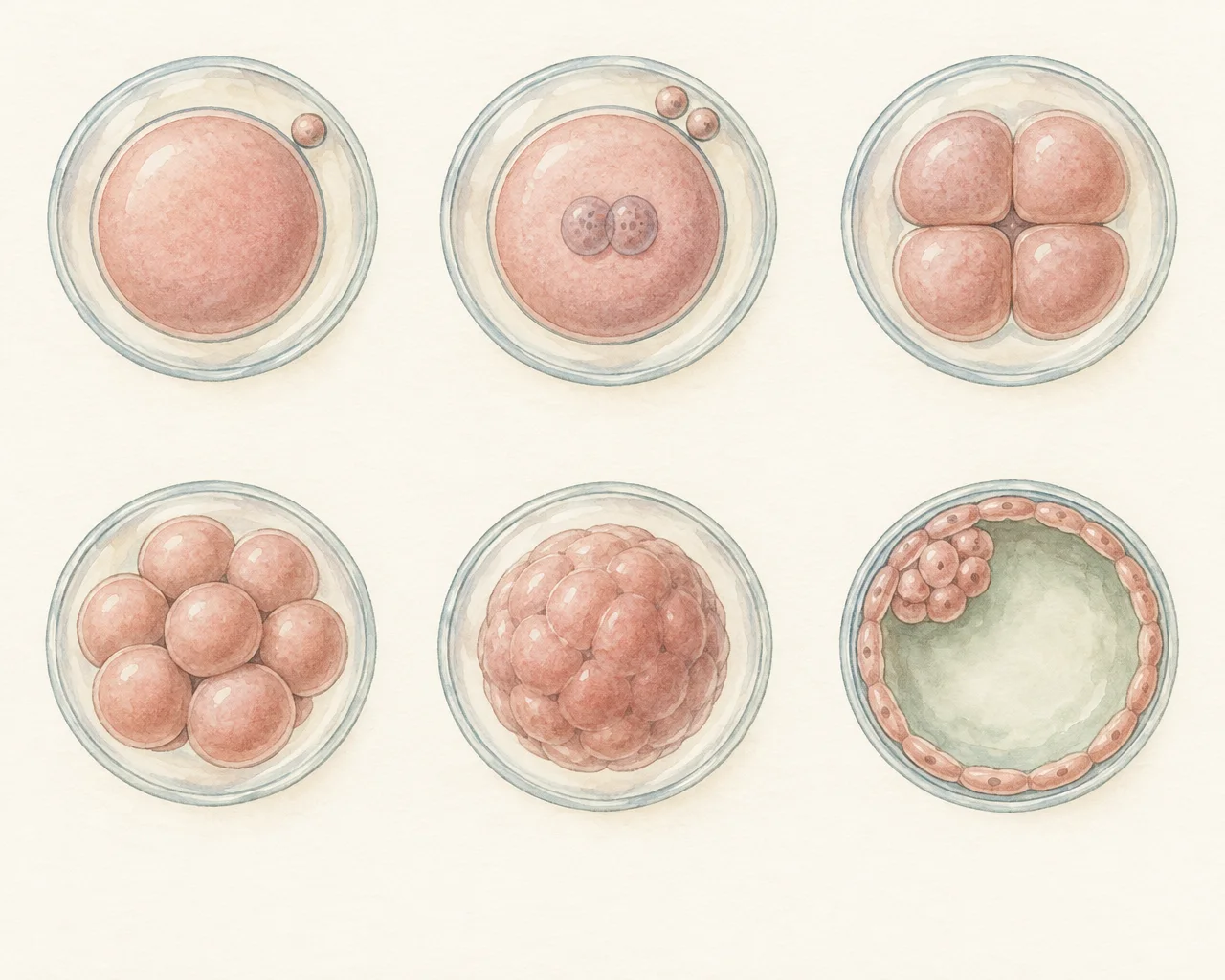
- Lesson 22.4 · 4 min Start hereRead Growing, freezing and transfer day What happens to embryos day by day in the lab, how vitrification freezes them safely, and why one embryo at a time is the safest transfer.


Learning aims
By the end of this module you will be able to:
- Describe what an embryology laboratory is and how its incubators, culture medium and quality checks protect eggs and embryos.
- Explain how witnessing and labelling keep every egg, sperm sample and embryo with the right person.
- Recognise the three stages of egg maturity (GV, MI and MII) and explain why not every egg collected is mature.
- Compare conventional IVF with ICSI and explain when ICSI helps and when it does not.
- Describe how embryos develop day by day in the lab, and how vitrification freezes them without ice.
- Explain why transferring one embryo at a time is the safest approach.
The module in brief
The module in brief
- The embryology lab keeps eggs and embryos close to 37 °C, in low oxygen and in culture medium under oil, and disturbs them as little as possible.
- Every dish is labelled with your unique code, and a witness or electronic system checks it at every critical step.
- On collection day the embryologist finds each egg in its cumulus cloud; after denudation, each egg is graded GV, MI or MII, and only MII eggs are ready for sperm.
- About 15 to 20% of eggs are usually still immature, which is normal.
- ICSI injects one sperm into each mature egg and helps when sperm are the problem; with normal sperm it has not been shown to add babies.
- A normally fertilised egg shows two pronuclei (2PN) about 16 to 17 hours later, and a healthy embryo reaches the blastocyst stage on day 5 or 6.
- Vitrification freezes eggs and embryos so fast that no ice forms, and most vitrified blastocysts survive warming.
- Transferring one embryo at a time avoids most twin pregnancies and their risks.