
Module 10
The placenta, membranes and cord
The placenta, the membranes, the fluid and the cord are built by the pregnancy to keep the baby alive. This module shows how they form, what they do, and why twins can share them.
- 4lessons
- 16 minreading
- 6quiz questions
The lessons and the quiz in this module are part of the Fertility with Kara Package. Module 1 is free to read.
Your way through Module 10
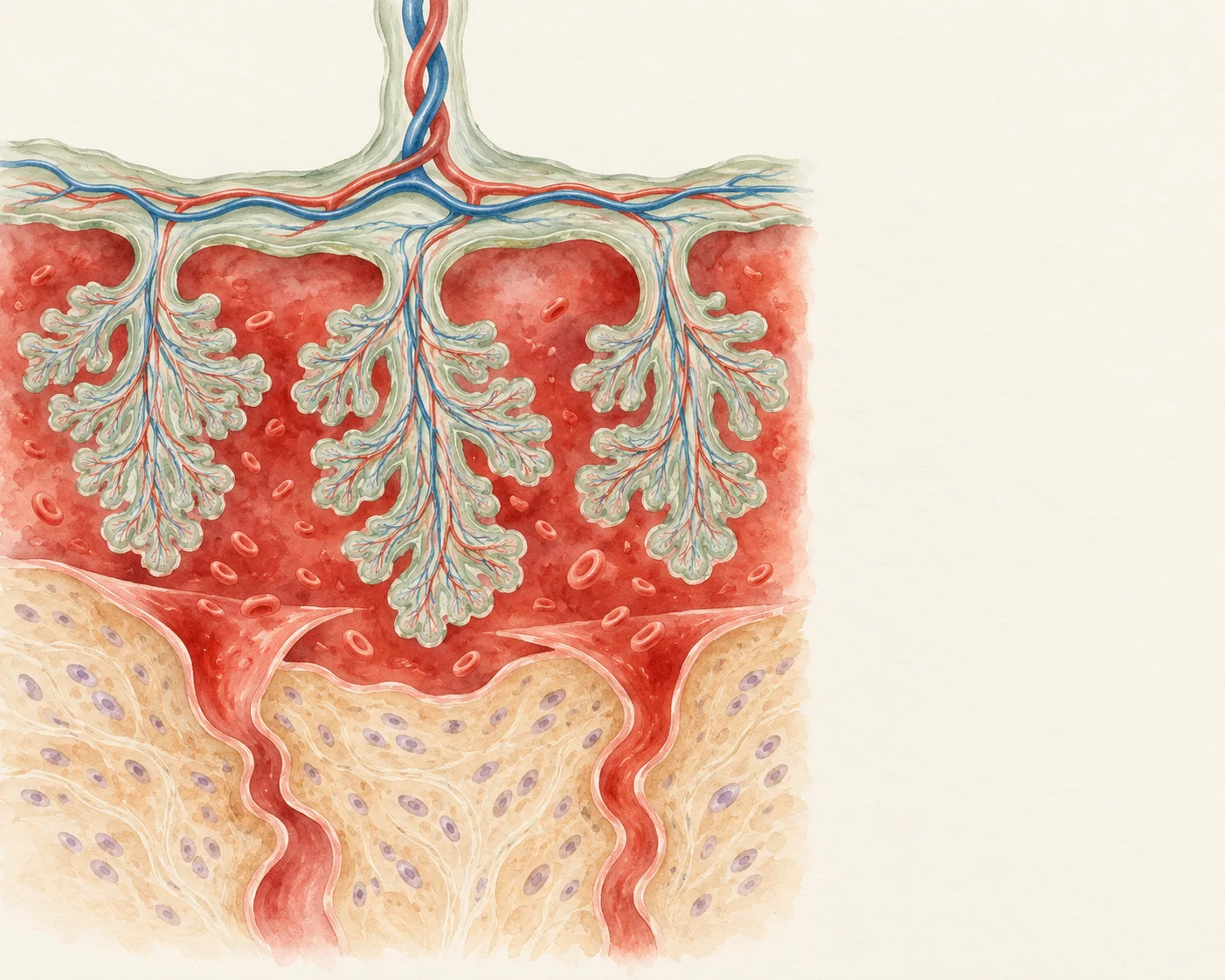
- Lesson 10.1 · 4 min Start hereRead How the placenta forms How the outer ring of cells in the blastocyst becomes the placenta, and how it opens up the mother's blood supply.
- Lesson 10.2 · 4 min Start hereRead What the placenta does How the placenta works as the baby's lungs, gut, kidneys and liver, what it lets through, and what happens when it struggles.
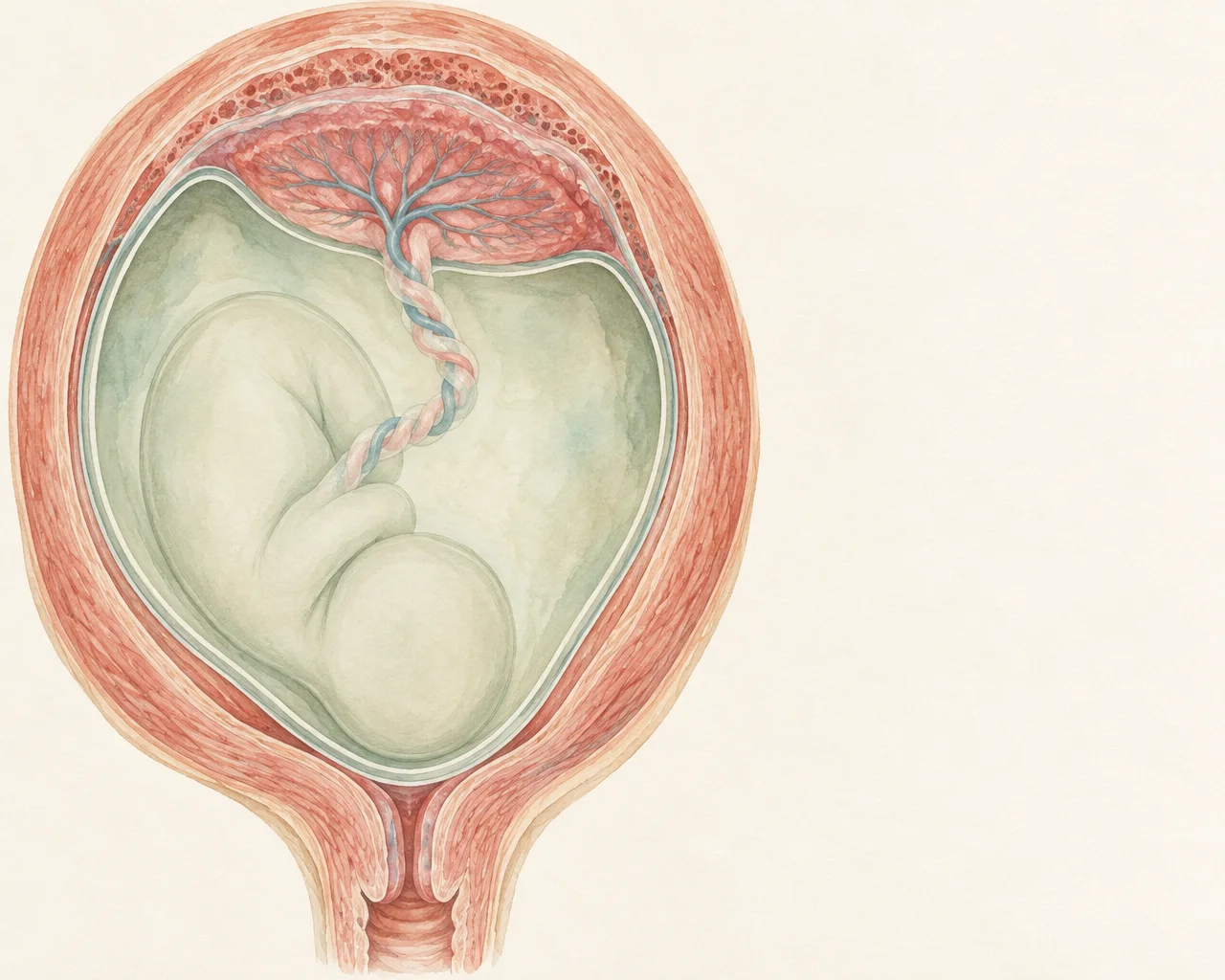
- Lesson 10.3 · 4 min Start hereRead The membranes, the fluid and the cord The two membranes of the pregnancy sac, the amniotic fluid inside it, and the umbilical cord that links the baby to the placenta.
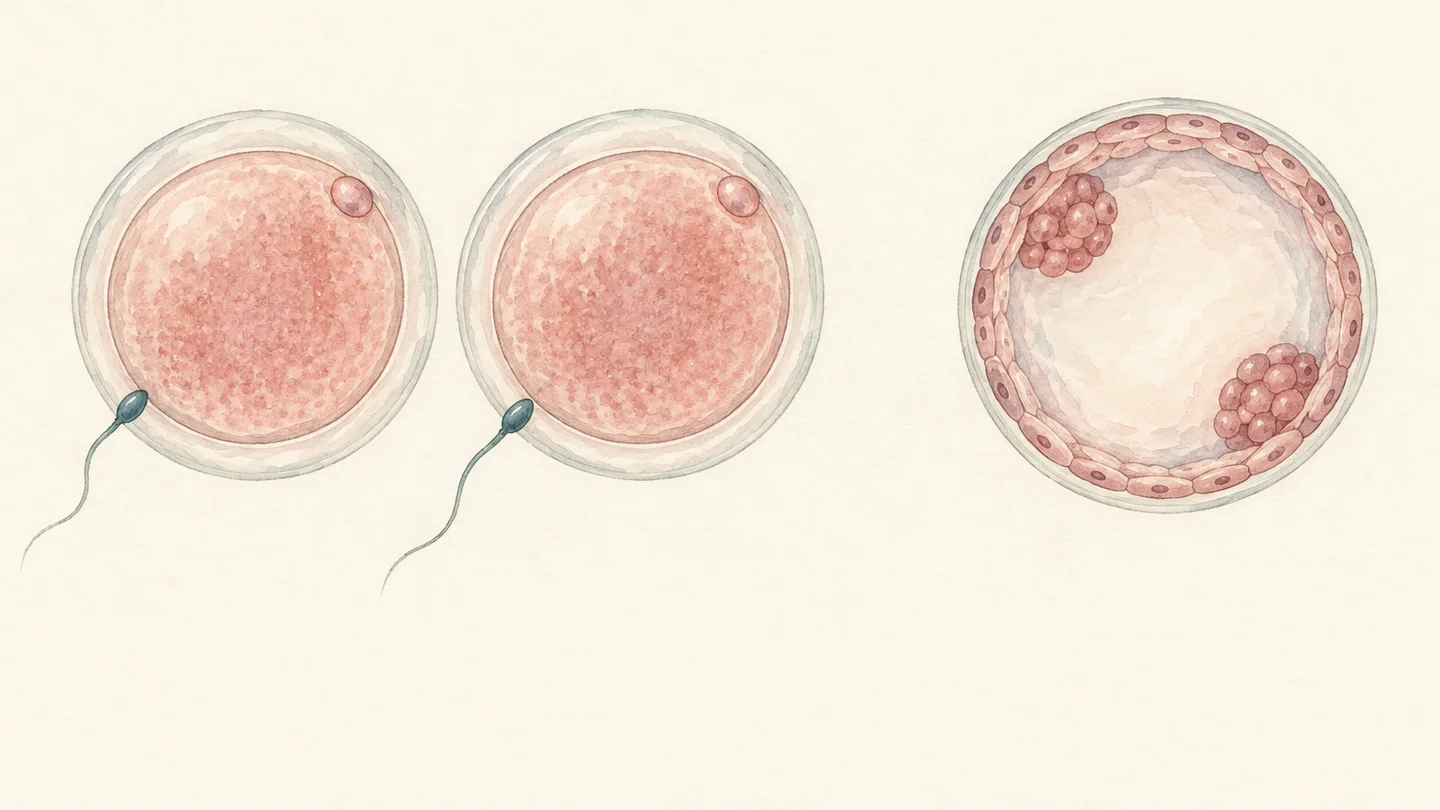
- Lesson 10.4 · 4 min Start hereRead Twins: identical, non-identical and how they share How non-identical and identical twins begin, why some share a placenta, and why that matters for care in pregnancy.

Learning aims
By the end of this module you will be able to:
- Describe how the trophectoderm becomes the trophoblast, the chorionic villi and the placenta.
- Explain how the mother's and baby's blood exchange oxygen, nutrients and waste without mixing.
- Recognise what the placenta lets through, including antibodies, alcohol and many medicines, and the hormones it makes.
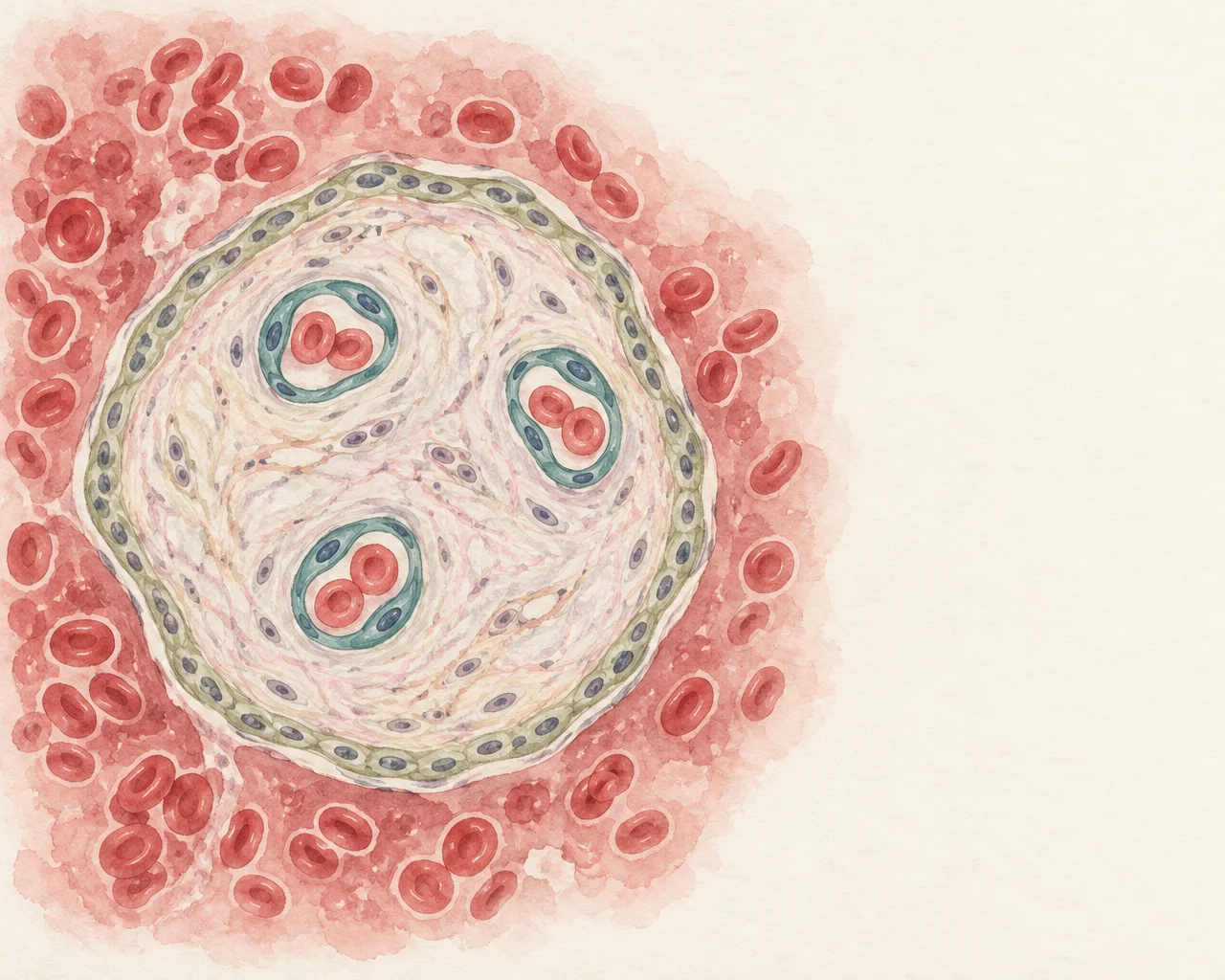
- Describe the amnion, chorion, amniotic fluid and umbilical cord, and what each does.
- Compare non-identical and identical twins, and explain why sharing a placenta matters for care.
The module in brief
The module in brief
- The placenta grows mainly from the blastocyst's trophectoderm, which becomes the trophoblast and branches into chorionic villi.
- Trophoblast cells widen the mother's spiral arteries, and her blood flows freely into the placenta from the end of the first trimester.
- The mother's and baby's blood stay separate, but oxygen, nutrients and waste cross the thin wall of each villus.
- The placenta lets antibodies through on purpose and cannot stop alcohol or many medicines, so it is not a perfect shield.
- It makes hCG and, later, progesterone and other hormones; problems with its early development are linked to pre-eclampsia and fetal growth restriction.
- The amnion and chorion form the sac; from mid-pregnancy much of the amniotic fluid is the baby's own urine, constantly recycled.
- The umbilical cord usually holds two arteries and one vein, cushioned by Wharton's jelly.
- Non-identical twins each have their own placenta; identical twins may share one, and shared placentas need closer monitoring.