
Module 21
The atlas, week by week
Fourteen snapshots from a single cell to full term, each with both week clocks, a size you can picture and the main changes.
- 3lessons
- 11 minreading
- 6quiz questions
The lessons and the quiz in this module are part of the Fertility with Kara Package. Module 1 is free to read.
Your way through Module 21
- Lesson 21.1 · 4 min Start hereRead How to use the atlas The two week clocks, how embryos and fetuses are measured, and what the Carnegie stages are, so every card in the atlas makes sense.
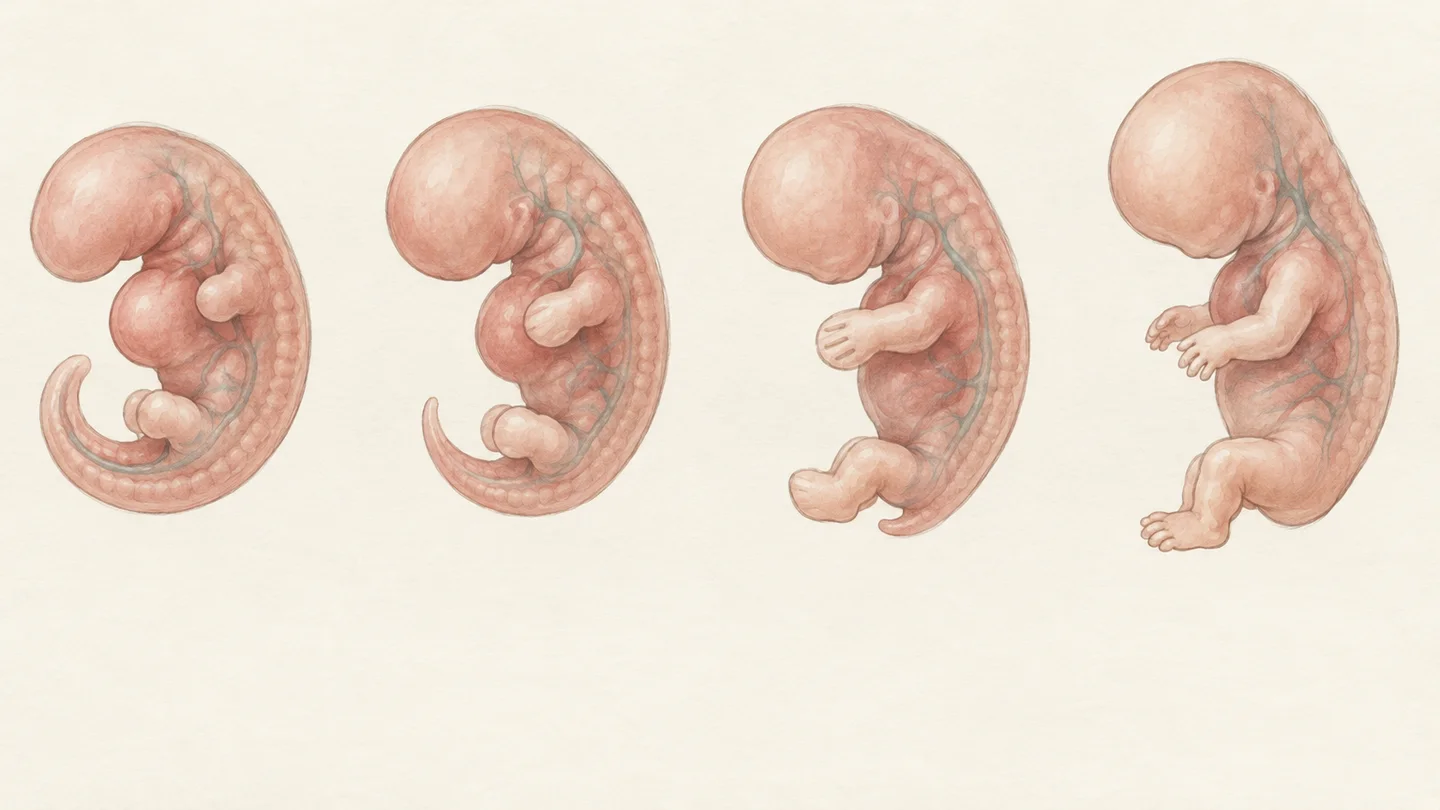
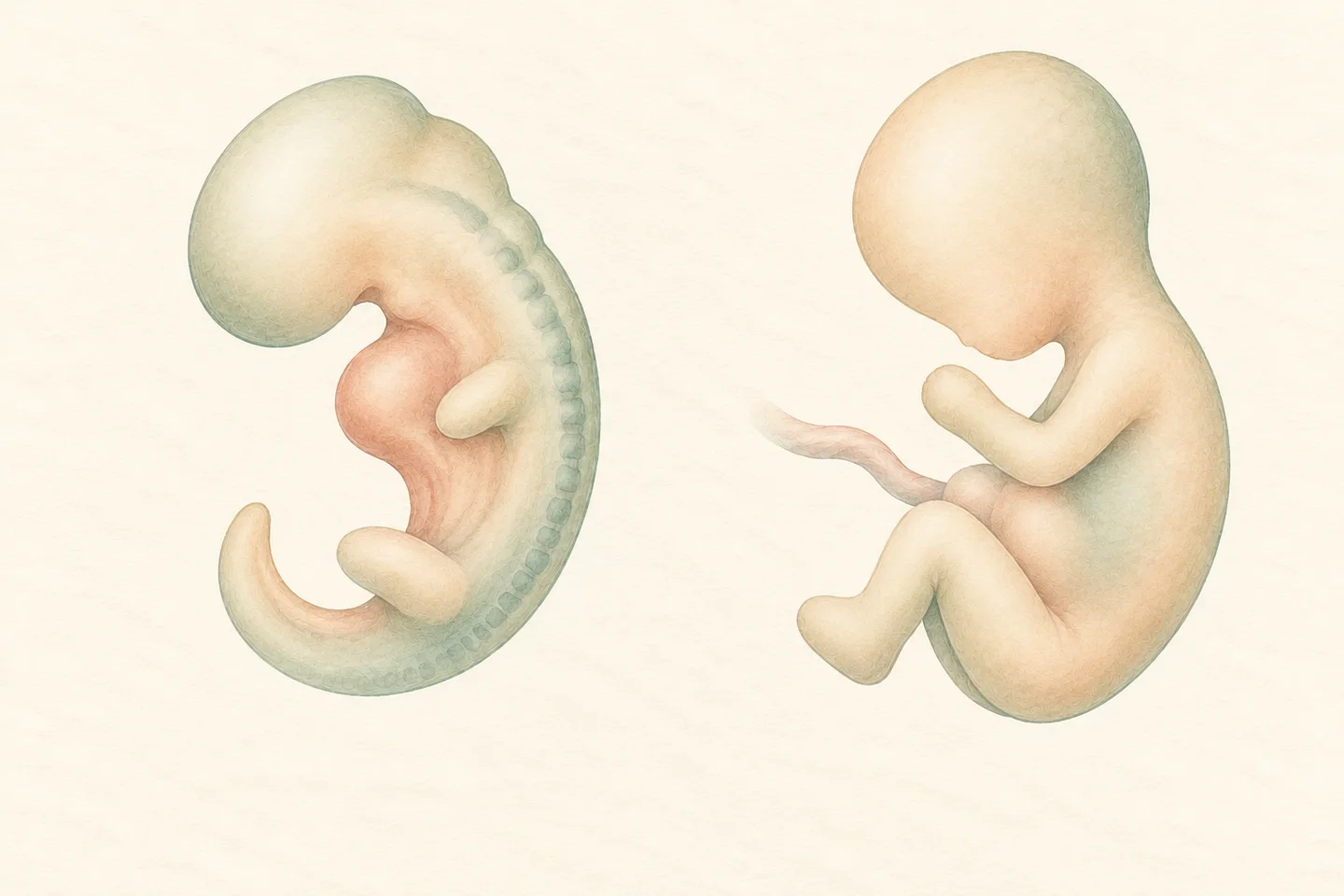
- Lesson 21.2 · 4 min Start hereRead The embryo, weeks 1 to 8 Eight weeks, eight cards: how a single cell becomes an embryo about 3 cm long with every main organ started.
- Lesson 21.3 · 3 min Start hereRead The fetus, weeks 9 to 40 From week 9 after fertilisation to birth: what still forms, how fast the fetus grows, and why a normal size is a range.

Learning aims
By the end of this module you will be able to:
- Explain the two week clocks and convert between weeks after fertilisation and weeks of pregnancy.
- Describe how embryos and fetuses are measured: greatest length, crown-rump length and estimated weight.
- Explain what the Carnegie stages are, and why they are defined by features rather than size or age.
- Describe the main changes in each week of the embryonic period.
- Describe how a fetus grows from week 9 to birth, and recognise that sizes are averages with a normal range.
The module in brief
The module in brief
- Embryology counts weeks after fertilisation; pregnancy counts from the first day of the last period, about two weeks earlier.
- Curled embryos are measured across their greatest length, scans measure the crown-rump length, and later scans estimate weight.
- The first 8 weeks after fertilisation are divided into 23 Carnegie stages, defined by which features have formed.
- By the end of week 8 after fertilisation, the embryo is about 3 cm long and every main organ has begun to form.
- From week 9 the fetus mostly grows and matures, and it gains most of its weight in the last three months.
- The egg supply peaks at about 18 to 22 weeks after fertilisation, and the testes reach the scrotum late in pregnancy.
- Every size in the atlas is an average from research studies; healthy babies vary.