
Module 19
The reproductive organs
How the same starting tissue becomes testes or ovaries, how two sets of tubes become two different tracts, and why a woman's egg supply is set before she is born.
- 4lessons
- 16 minreading
- 6quiz questions
The lessons and the quiz in this module are part of the Fertility with Kara Package. Module 1 is free to read.
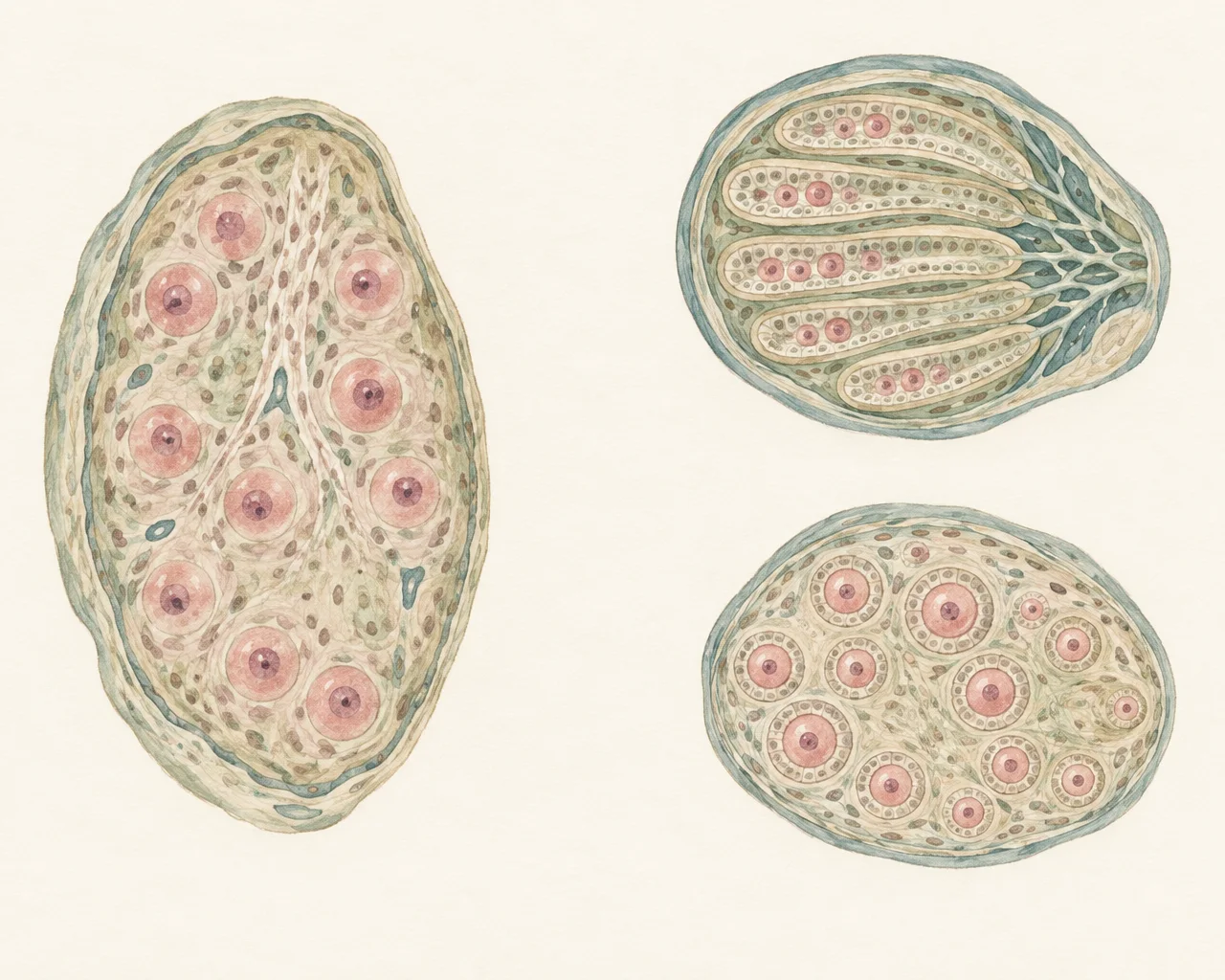
Your way through Module 19
- Lesson 19.1 · 4 min Start hereRead One starting point Why every embryo starts with the same gonads, where the future egg and sperm cells come from, and the gene that usually decides between testes and ovaries.
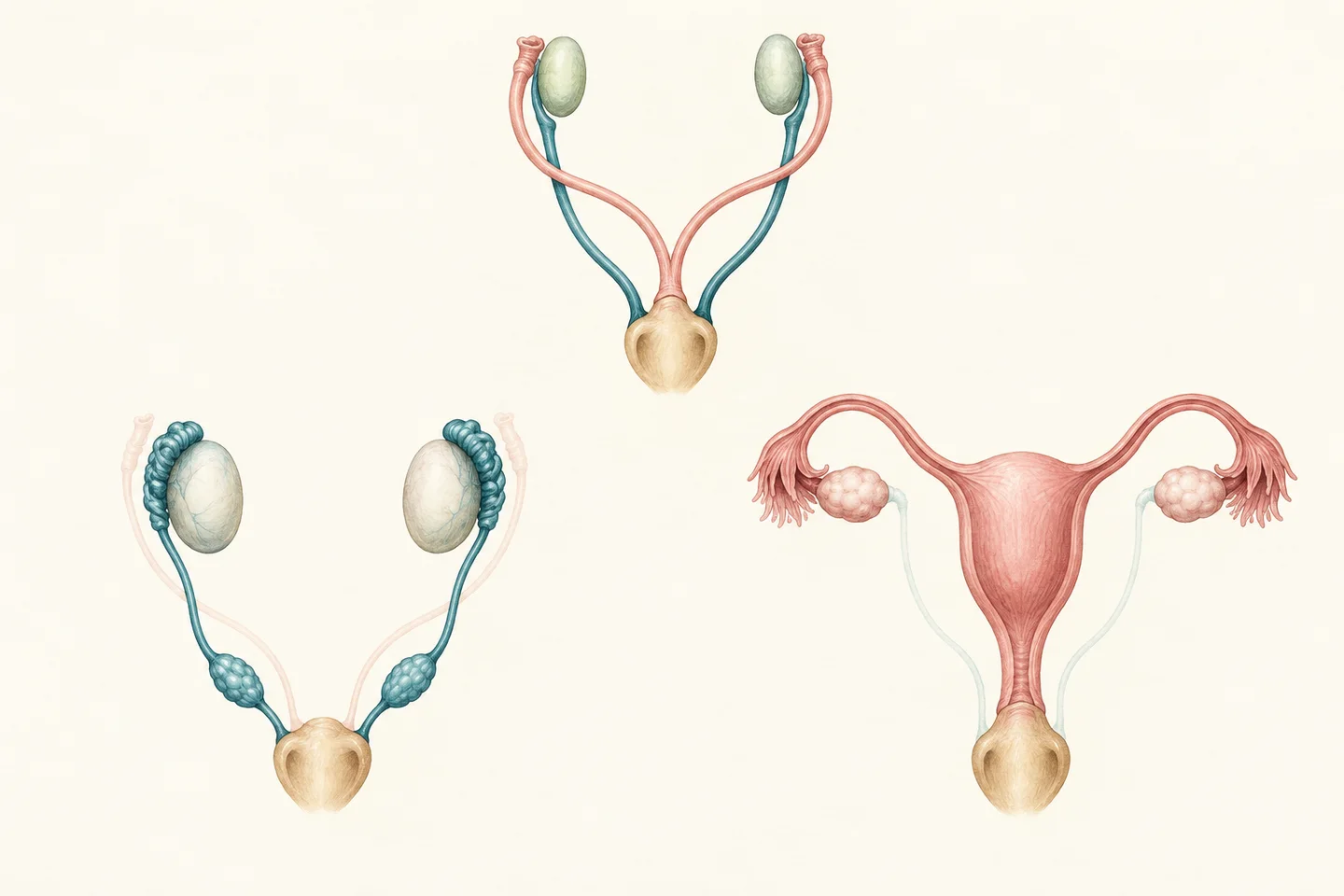
- Lesson 19.2 · 4 min Start hereRead Two sets of tubes, and the outside How every embryo builds two pairs of ducts, how hormones from the testes decide which pair stays, and how the outer genitals take shape.
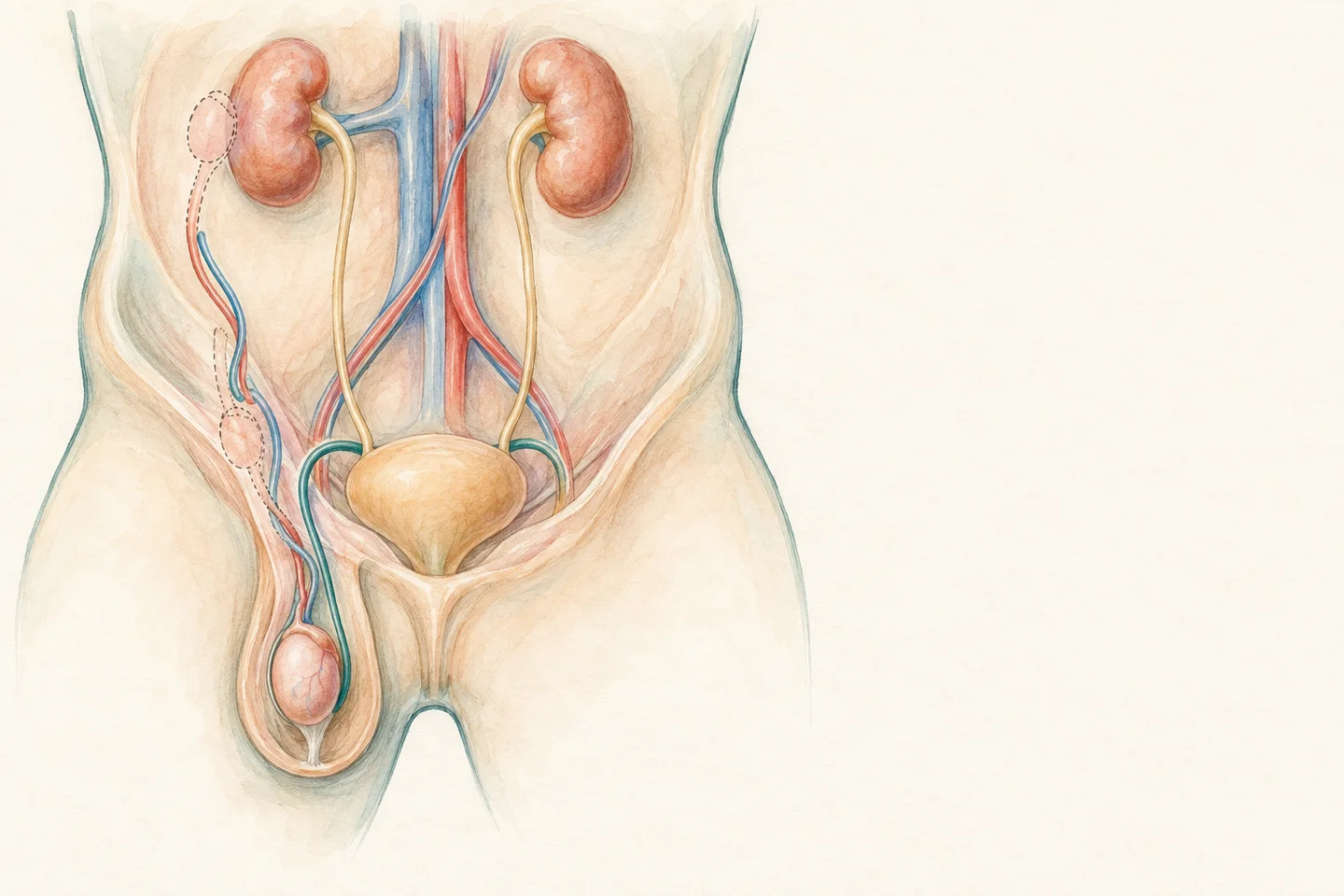
- Lesson 19.3 · 4 min Start hereRead Moving into place, and the egg supply How the testes travel down into the scrotum before birth, and why a woman's supply of eggs is set before she is born.
- Lesson 19.4 · 4 min Start hereRead Differences of sex development What happens when chromosomes, gonads, hormones and anatomy do not all follow the most common pattern, explained in current, respectful terms.

Learning aims
By the end of this module you will be able to:
- Describe how the indifferent gonad becomes a testis or an ovary, and where the germ cells come from.
- Explain what the SRY gene, anti-Müllerian hormone and testosterone each do.
- Compare the Wolffian and Müllerian ducts and name what each becomes.
- Describe how the testes move into the scrotum, and why an undescended testis matters for later fertility.
- Explain why a woman's egg supply is set before birth while men keep making sperm.
- Recognise the current terms for differences of sex development and describe them respectfully.
The module in brief
The module in brief
- Every embryo starts with the same indifferent gonads, and the germ cells that will make eggs or sperm travel into them from the yolk sac wall in weeks 5 and 6.
- In most embryos with a Y chromosome, the SRY gene turns the gonads into testes from week 7; without SRY they become ovaries.
- Every embryo builds two pairs of ducts: testes keep the Wolffian ducts with testosterone and remove the Müllerian ducts with anti-Müllerian hormone.
- Without testes, the Müllerian ducts form the fallopian tubes, uterus, cervix and upper vagina, and the outer genitals follow the female path.
- The testes move down in two steps and normally reach the scrotum in the last three months of pregnancy; an undescended testis is linked with lower fertility later.
- A woman's egg supply peaks before she is born and falls for the rest of her life, while men keep making new sperm from puberty on.
- Differences of sex development happen when one step takes a different route; care centres on wellbeing, honest communication and shared decisions.