
Module 20
The brain and nervous system
How a flat strip of cells becomes the brain and spinal cord in the first month, why folic acid before pregnancy matters, and why the brain keeps growing for years after birth.
- 4lessons
- 14 minreading
- 6quiz questions
The lessons and the quiz in this module are part of the Fertility with Kara Package. Module 1 is free to read.
Your way through Module 20
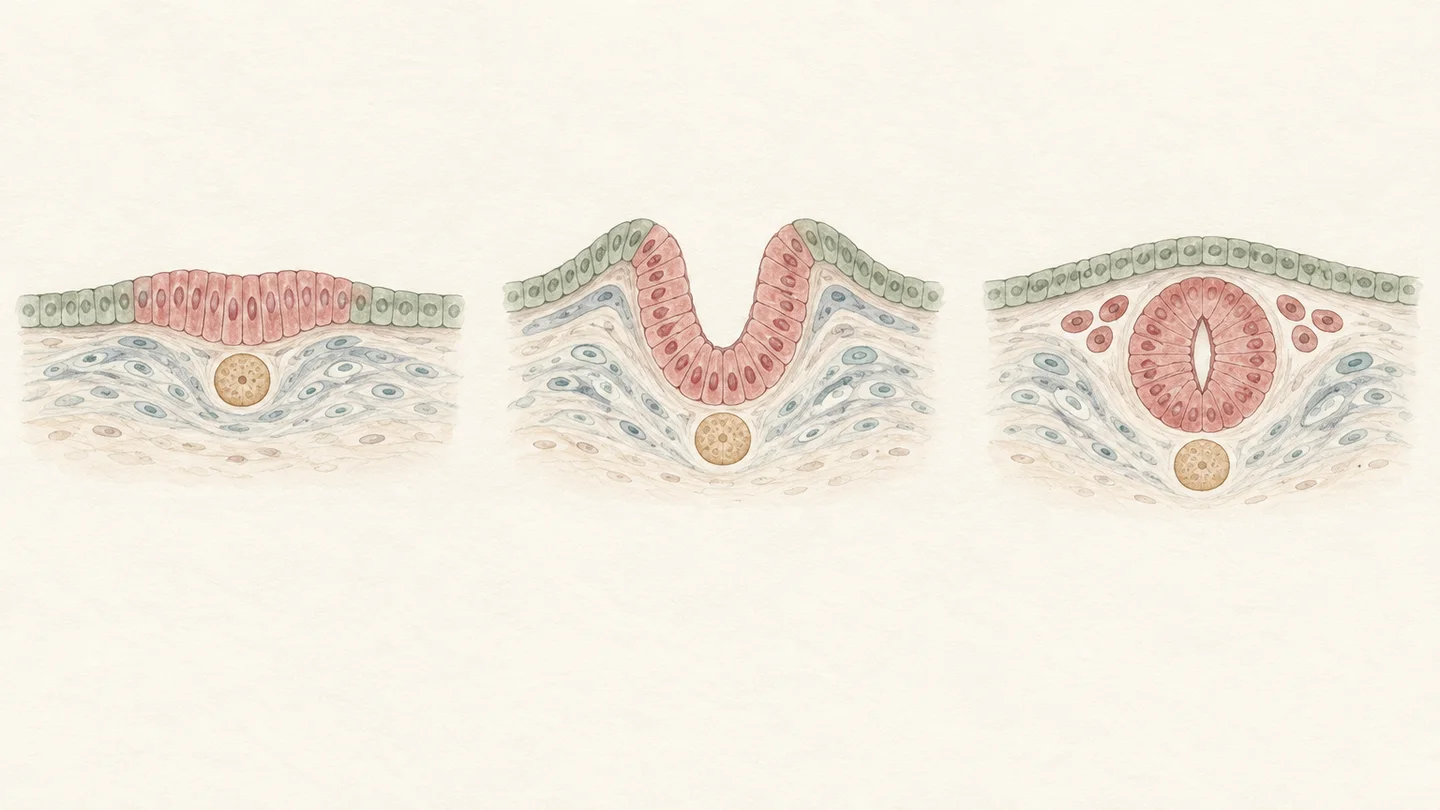
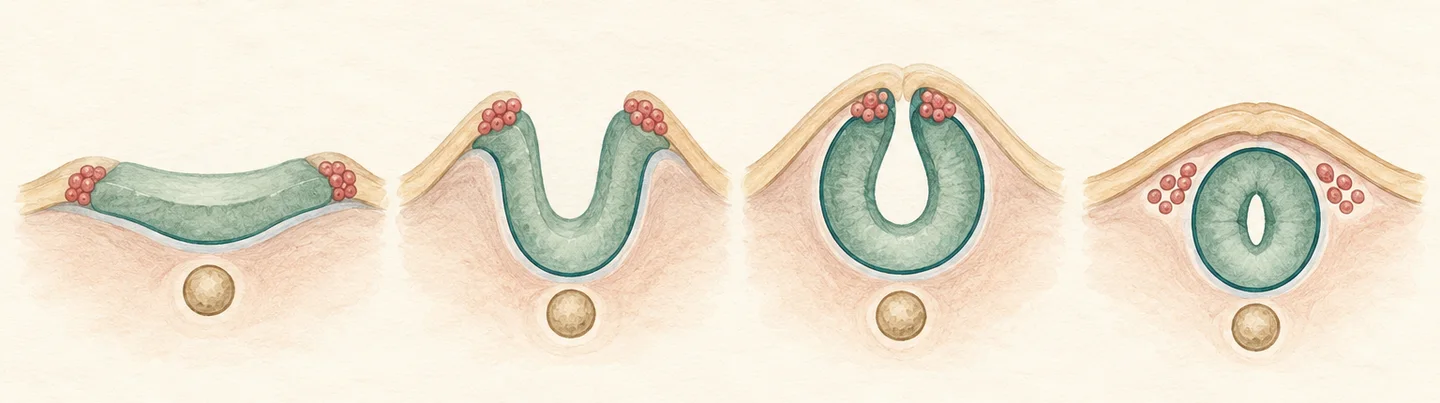
- Lesson 20.1 · 4 min Start hereRead From plate to tube How a flat strip of cells on the embryo's back rolls up into the tube that becomes the brain and spinal cord, and the travelling cells it sets free.
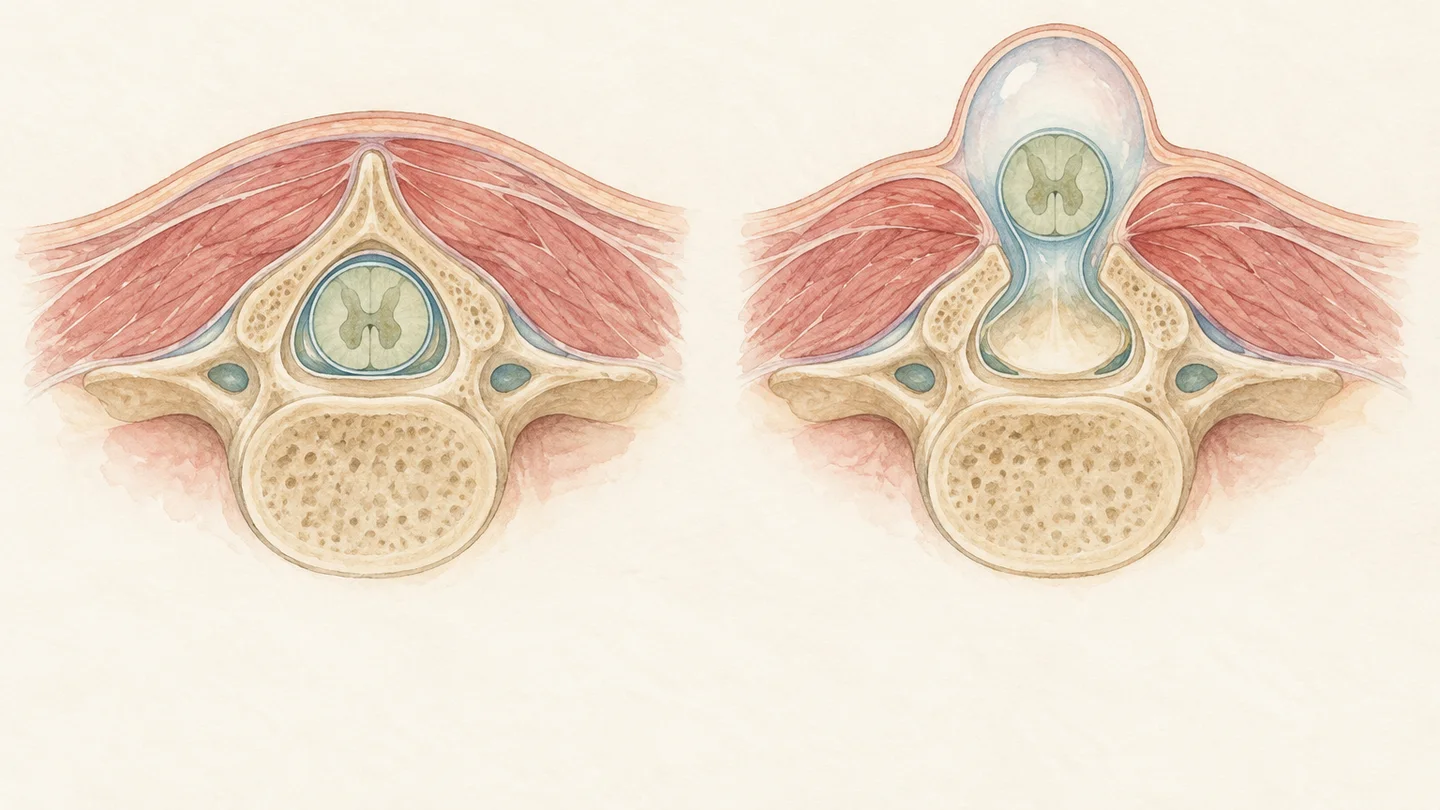
- Lesson 20.2 · 4 min Start hereRead When the tube stays open Why the neural tube is closed before many women know they are pregnant, what happens when part of it stays open, and how far folic acid helps.
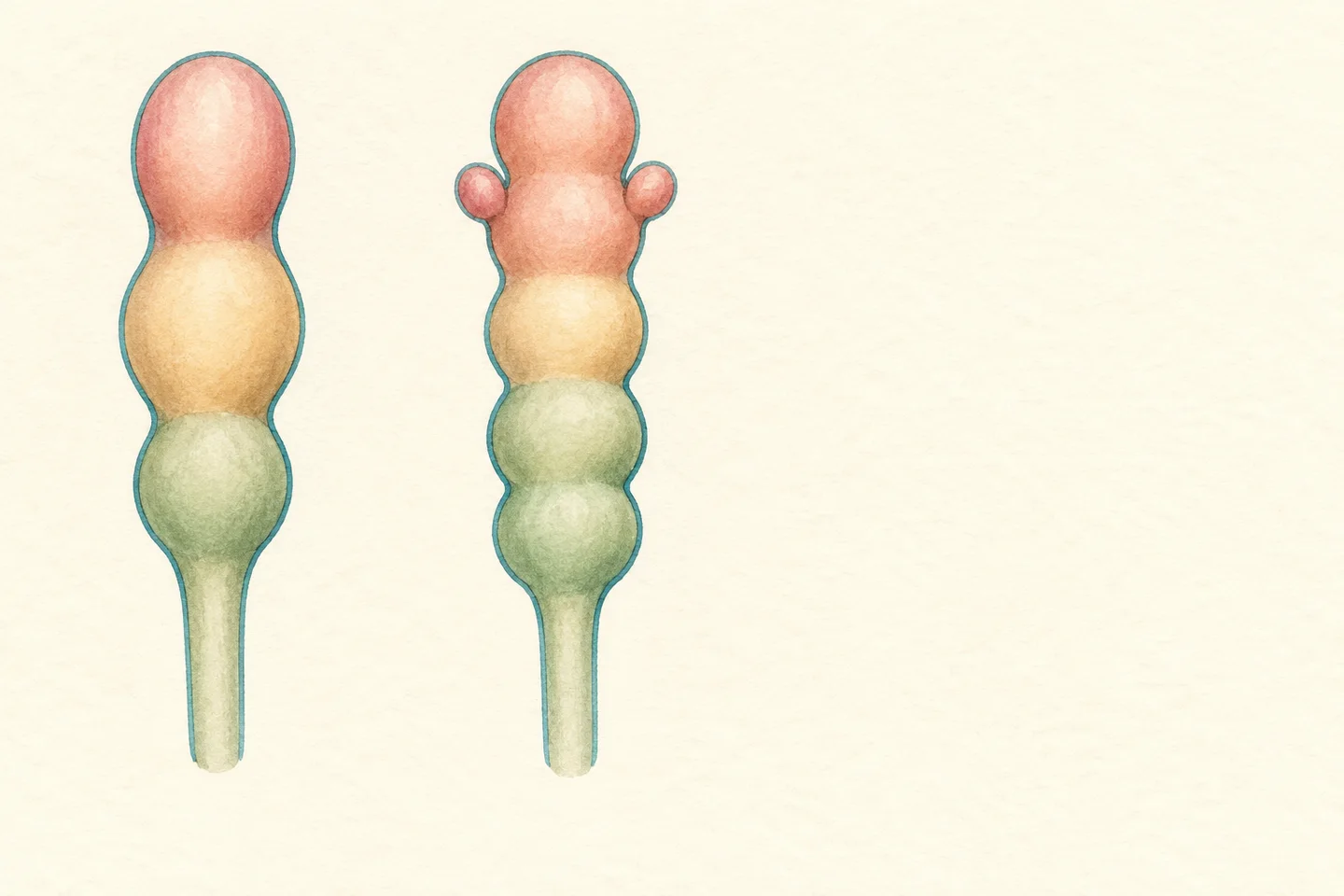
- Lesson 20.3 · 3 min Start hereRead Brain swellings and the spinal cord How the front of the neural tube balloons into the parts of the brain, how the rest becomes the spinal cord, and where the hormone centres that run fertility come from.
- Lesson 20.4 · 3 min Start hereRead The senses, and a brain that keeps growing How the eyes and ears begin, when a fetus first responds to sound, and why the brain is still far from finished at birth.

Learning aims
By the end of this module you will be able to:
- Describe how the neural plate folds and closes into the neural tube, with the timing in both clocks.
- Explain what a neural tube defect is, and why folic acid is advised before conception.
- Name the three and then five brain regions and what each becomes.
- Describe how the spinal cord forms, and list some tissues that come from the neural crest.
- Recognise when the eyes, ears and hearing begin, and how much the brain grows after birth.
The module in brief
The module in brief
- The neural plate appears at about day 18 after fertilisation, and its folds start to join at about day 21 to 22.
- The neural tube is fully closed by day 26 to 28 after fertilisation, about 6 weeks of pregnancy, often before a pregnancy is known.
- Folic acid before conception lowers the risk of a neural tube defect by about two-thirds; South African guidance is 5 mg a day, and many other countries advise 0.4 mg.
- Neural crest cells leave the edges of the folds and form sensory and gut nerves, pigment cells and much of the face.
- The front of the tube forms three brain swellings in week 4 and five regions in week 5; the rest becomes the spinal cord.
- The eyes grow out from the forebrain, and a fetus first responds to sound at about 19 weeks of pregnancy.
- Brain volume roughly doubles in the first year after birth, and some connections keep maturing after adolescence.