
Module 05
The first week: from zygote to blastocyst
How one fertilised cell becomes a blastocyst of around a hundred cells in about five days, seen through the eyes of the embryologist who watches it happen.
- 5lessons
- 19 minreading
- 6quiz questions
The lessons and the quiz in this module are part of the Fertility with Kara Package. Module 1 is free to read.
Your way through Module 05
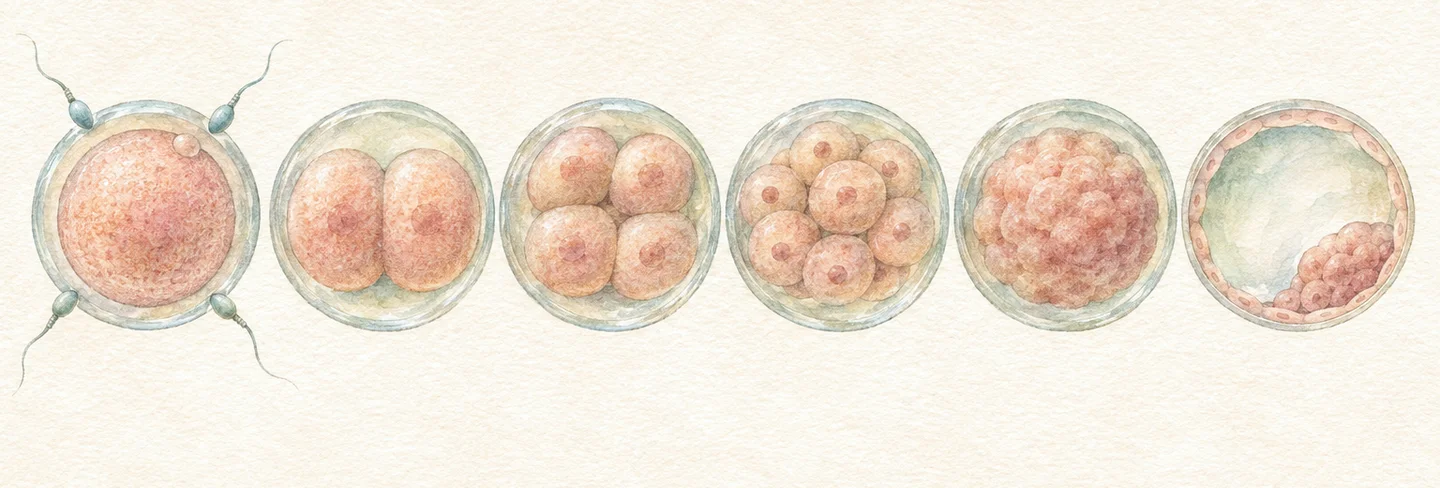
- Lesson 5.1 · 4 min Start hereRead Cleavage, day by day How one cell becomes eight in three days without the embryo getting any bigger, and what the lab checks on each of those days.
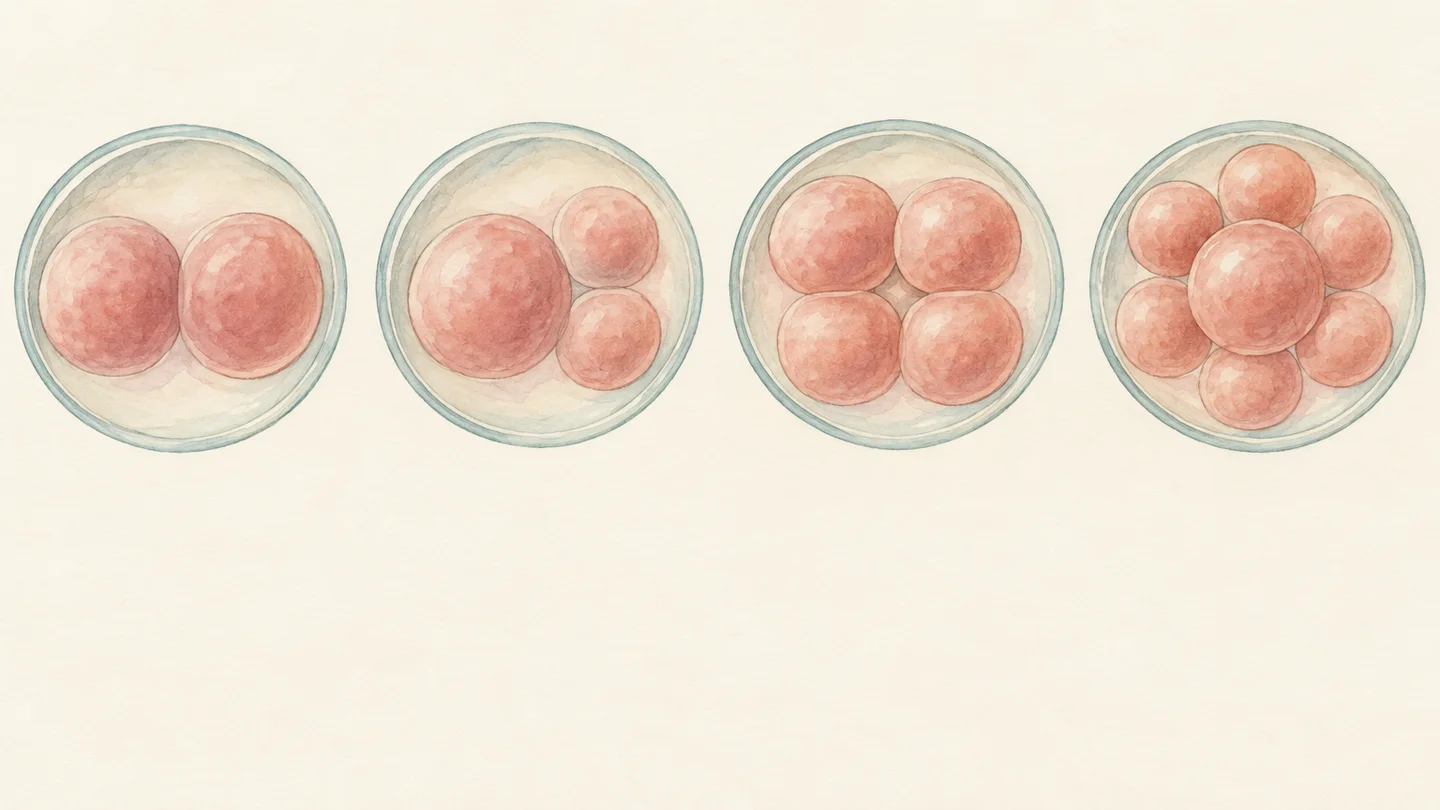
- Lesson 5.2 · 4 min Start hereRead Uneven divisions and the embryo's own genes Why embryos often have odd numbers of cells, and why day 3 is the point where the embryo starts running on its own instructions.
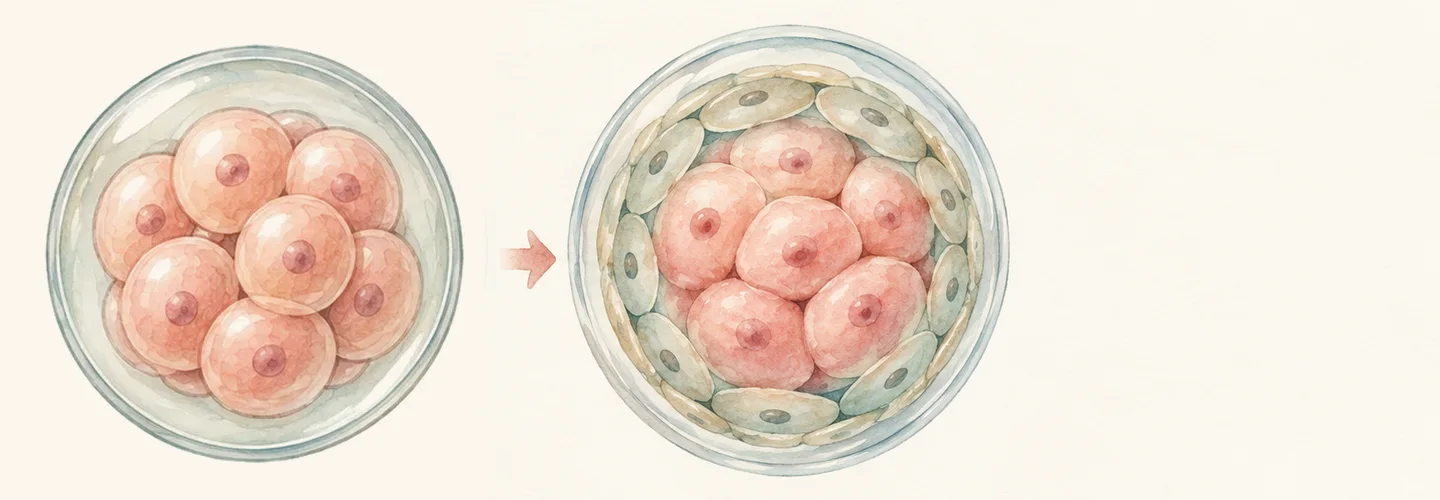
- Lesson 5.3 · 3 min Start hereRead Compaction and the morula How the loose cluster of cells pulls together on day 4, and why this is the moment the embryo first has an inside and an outside.
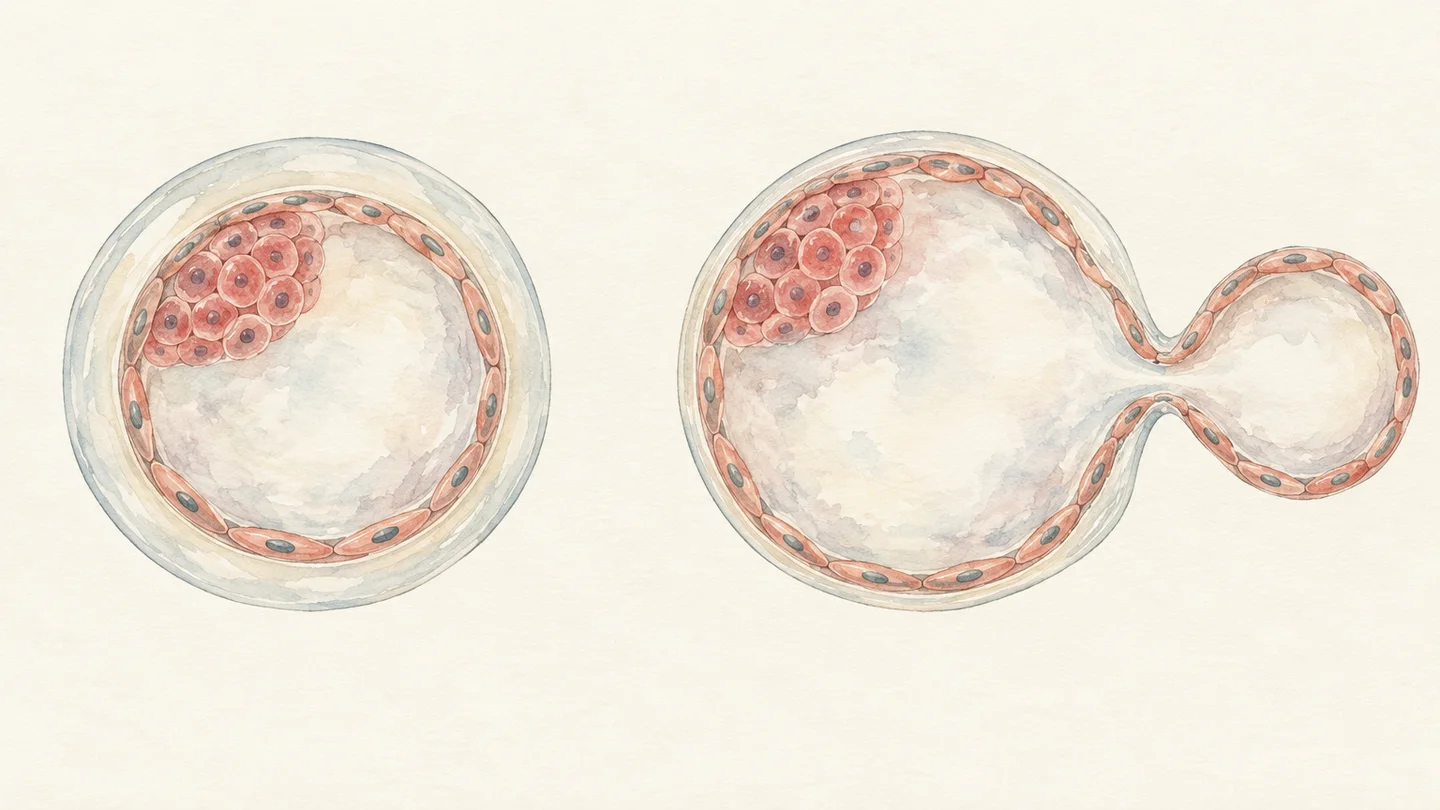
- Lesson 5.4 · 4 min Start hereRead The blastocyst and hatching How the morula fills with fluid to become a blastocyst, what its two groups of cells will become, and how it breaks out of its shell.
- Lesson 5.5 · 4 min Start hereRead Down the tube, and why many embryos stop Where the embryo is on each day of its first week in the body, when it reaches the uterus, and why losing embryos early is a normal part of human reproduction.
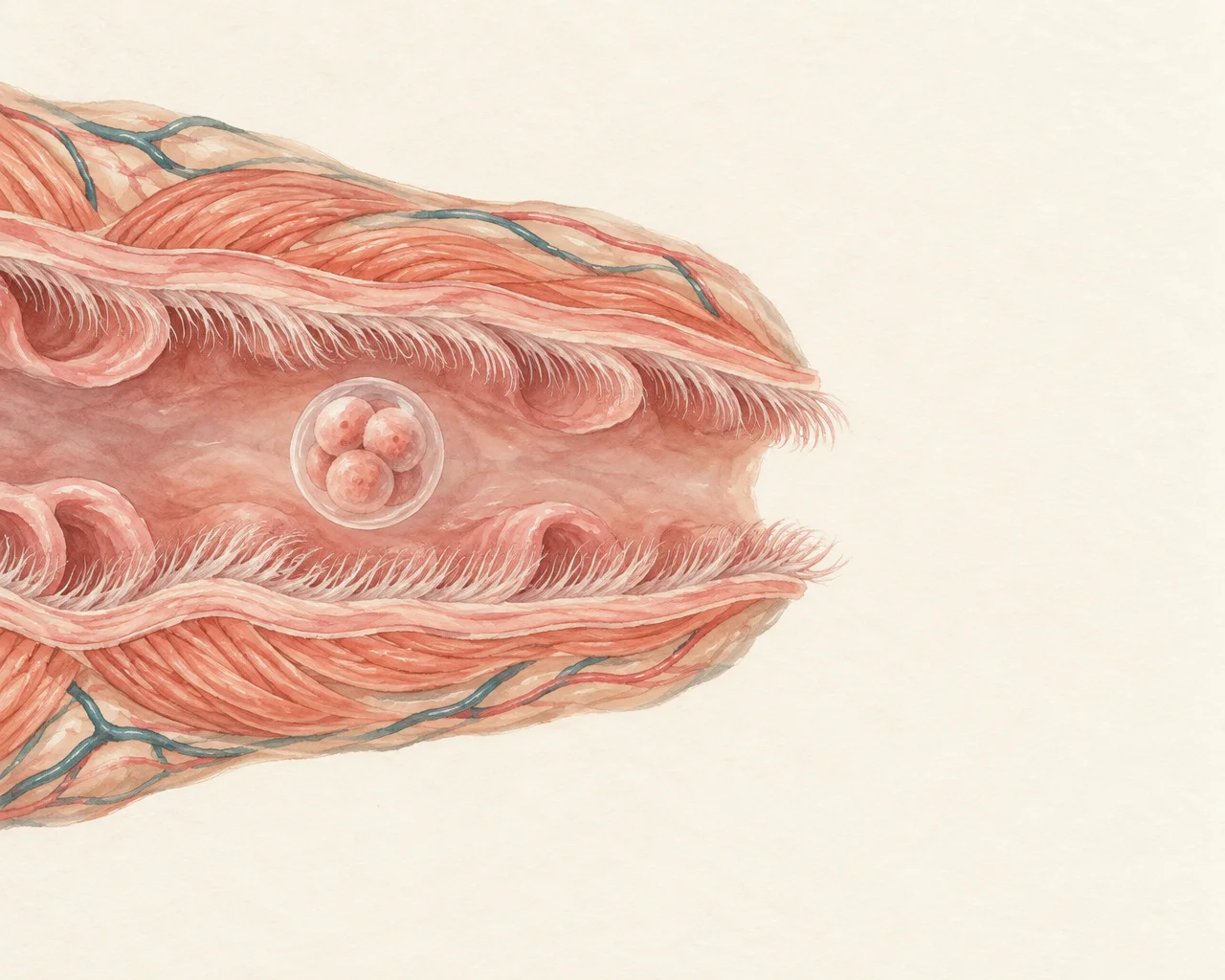

Learning aims
By the end of this module you will be able to:
- Describe what an embryo looks like on each day from day 1 to day 6, and what the laboratory checks at each stage.
- Explain why cleavage divisions make more but smaller cells, and why uneven cell numbers are normal.
- Explain what embryonic genome activation is and why day 3 is a turning point.
- Describe compaction, the morula and the blastocyst, and recognise the inner cell mass and the trophectoderm.
- Compare where the embryo is each day in natural conception with what happens in IVF.
- Explain why many embryos naturally stop developing in the first week, and ask your clinic how your own embryos progressed.
The module in brief
The module in brief
- In IVF, day 0 is the day of egg collection; the zygote is checked on day 1, and the expected stages are 4 cells on day 2 and 8 cells on day 3.
- Cleavage divisions make more but smaller cells inside the same shell, so the embryo does not grow during the first days.
- Cells do not divide in perfect step, so embryos with 3, 5, 6 or 7 cells are common.
- Around day 3, the embryo switches on its own genes and stops relying on supplies stored in the egg.
- On day 4 the cells press together into a morula, and for the first time the embryo has outside cells and inside cells.
- On days 5 and 6 the embryo becomes a blastocyst: the inner cell mass will form the baby and the trophectoderm most of the placenta; it then hatches from its shell.
- In the body, the embryo divides as it moves down the tube and usually reaches the uterus as a morula around day 3 to 4, then becomes a blastocyst, hatches around day 5 to 6 (sometimes day 7) and begins to implant around day 6 to 7.
- Many embryos stop developing in the first week, in the body and in the lab, often because of chromosome errors; this is a normal part of human reproduction and nobody's fault.