
Module 12
How organs form
How three thin layers of cells become every organ in the body, why timing matters so much, and what you can do to protect the weeks when organs form.
- 4lessons
- 16 minreading
- 6quiz questions
The lessons and the quiz in this module are part of the Fertility with Kara Package. Module 1 is free to read.
Your way through Module 12
- Lesson 12.1 · 4 min Start hereRead From three layers to a whole body How three thin sheets of cells in the early embryo give rise to every organ in the body.
- Lesson 12.2 · 4 min Start hereRead Signals and timing How one group of cells tells its neighbours what to become, and why each organ has a short window when it is most easily disturbed.
- Lesson 12.3 · 4 min Start hereRead Alcohol, smoking, medicines and infections What a teratogen is, which ones matter most around conception and in early pregnancy, and the steps that help.
- Lesson 12.4 · 4 min Start hereRead Folic acid and the neural tube How the brain and spinal cord begin as a groove that zips shut into a tube, and why folic acid before pregnancy protects it.

Learning aims
By the end of this module you will be able to:
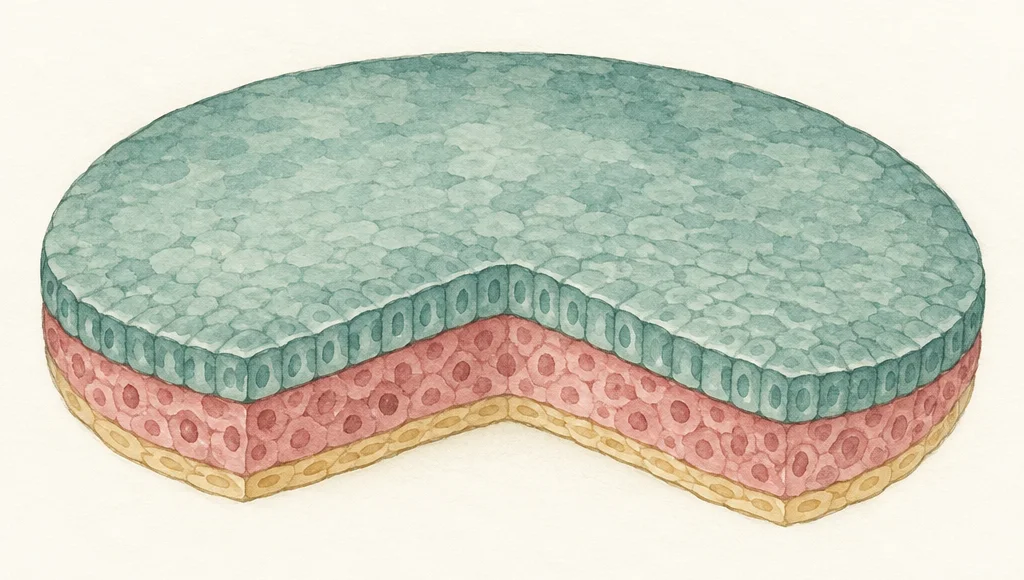
- Describe what each of the three germ layers becomes.
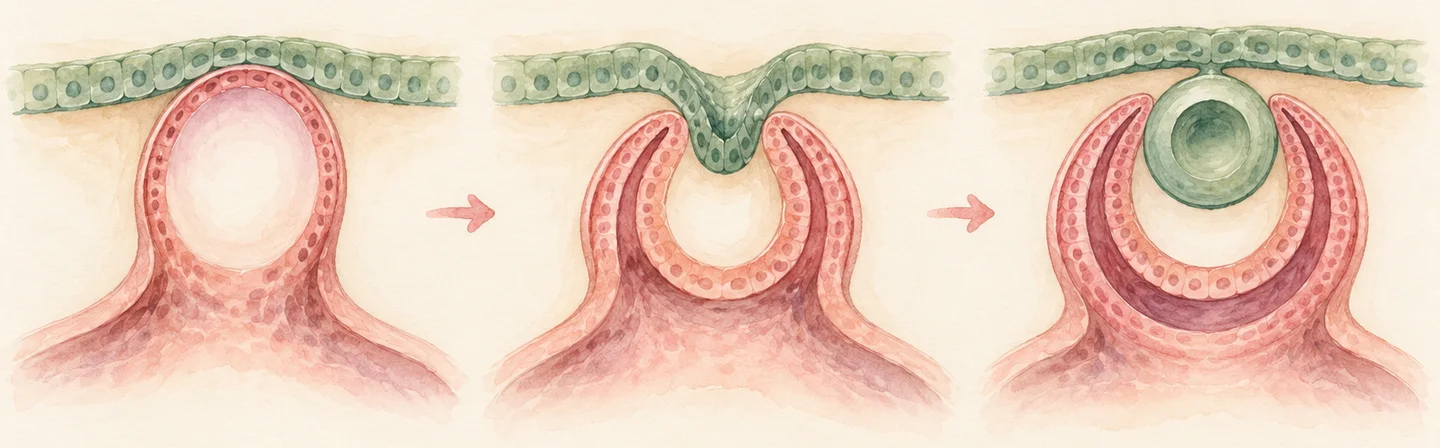
- Explain induction in simple terms, using the lens of the eye as an example.
- Explain what a critical period is and why most fall in weeks 3 to 8 after fertilisation.
- Recognise the main teratogens: alcohol, smoking, some medicines and some infections.
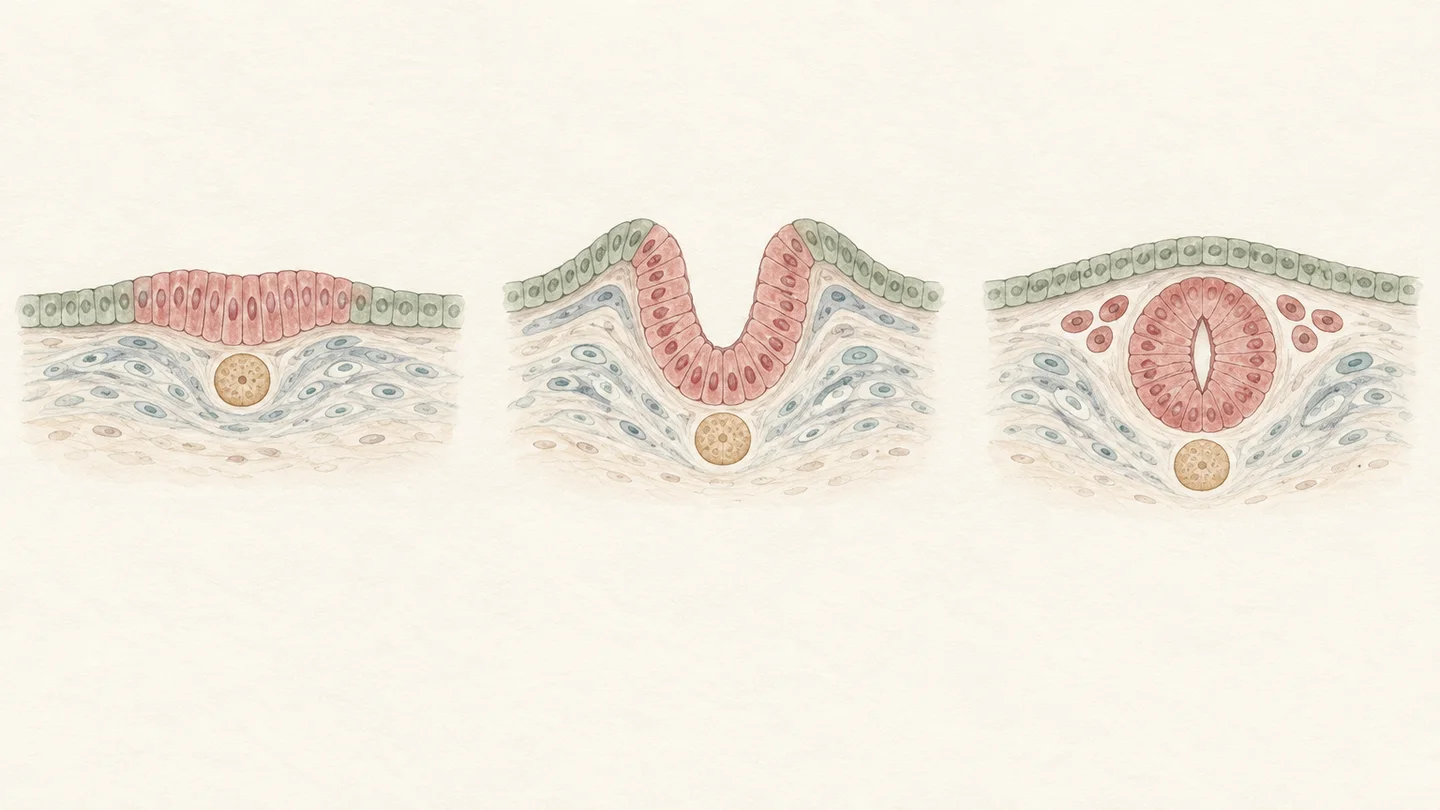
- Explain how the neural tube closes and why folic acid is advised before conception.
- Ask your healthcare professional the right questions about medicines, vaccinations and folic acid before trying to conceive.
The module in brief
The module in brief
- Every organ grows from three germ layers: ectoderm (skin and nervous system), mesoderm (heart, blood, muscle, bone, kidneys) and endoderm (linings of the gut and lungs, liver).
- Cells become organs by signalling to each other; when one tissue changes what its neighbour becomes, it is called induction.
- Most organs have their sensitive window, or critical period, between week 3 and week 8 after fertilisation; the brain stays sensitive throughout pregnancy.
- In the first two weeks after fertilisation, a harmful exposure tends to have no effect or to end the pregnancy, rather than to cause a specific birth difference.
- Alcohol, smoking, diabetes that is not well controlled, a few medicines such as valproate and isotretinoin, and infections such as rubella and CMV can disturb development.
- The neural tube starts to close at about day 21 to 22 after fertilisation and is fully closed by about day 26 to 28, often before a pregnancy is known.
- Folic acid before conception greatly lowers the risk of neural-tube defects; South African guidance is 5 mg daily, while many other countries advise 0.4 mg.
- Before or early in pregnancy, raise HIV care (keep taking ART), syphilis testing, fever, X-rays and scans, and live vaccines such as MMR with your healthcare professional.