
Module 23
Reading your embryo results
Learn to read your lab report like an embryologist: what each word means, why numbers fall at every step, what embryo grades say about your chances, and what to ask.
- 5lessons
- 20 minreading
- 6quiz questions
The lessons and the quiz in this module are part of the Fertility with Kara Package. Module 1 is free to read.
Your way through Module 23
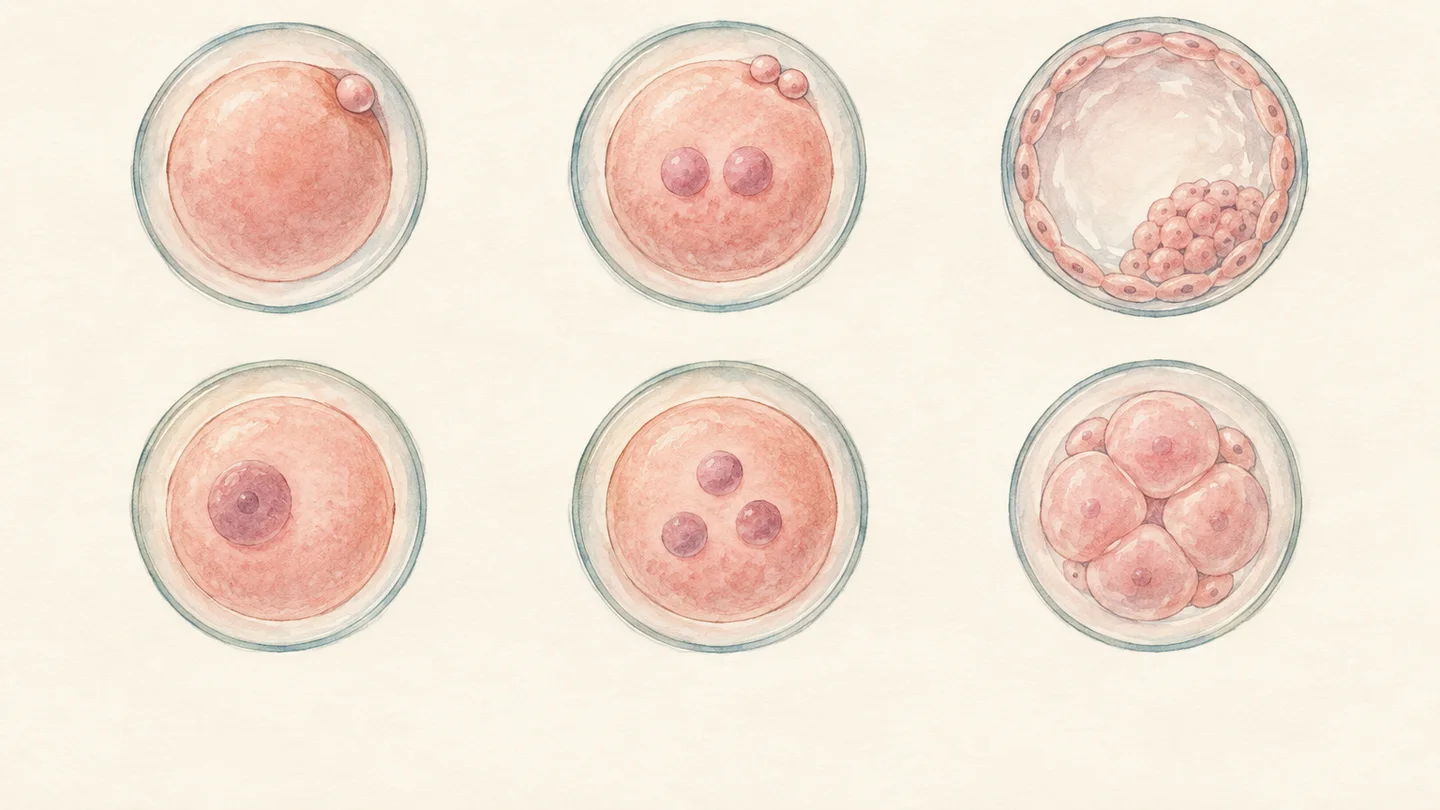
- Lesson 23.1 · 4 min Start hereRead The words on your lab report A plain-language guide to the terms embryologists use on reports and in those daily phone calls, from "MII" to "expanded blastocyst".
- Lesson 23.2 · 4 min Start hereRead Why the numbers fall at each step Why the numbers drop at every stage of IVF, from eggs collected to blastocysts, and what ranges labs expect.
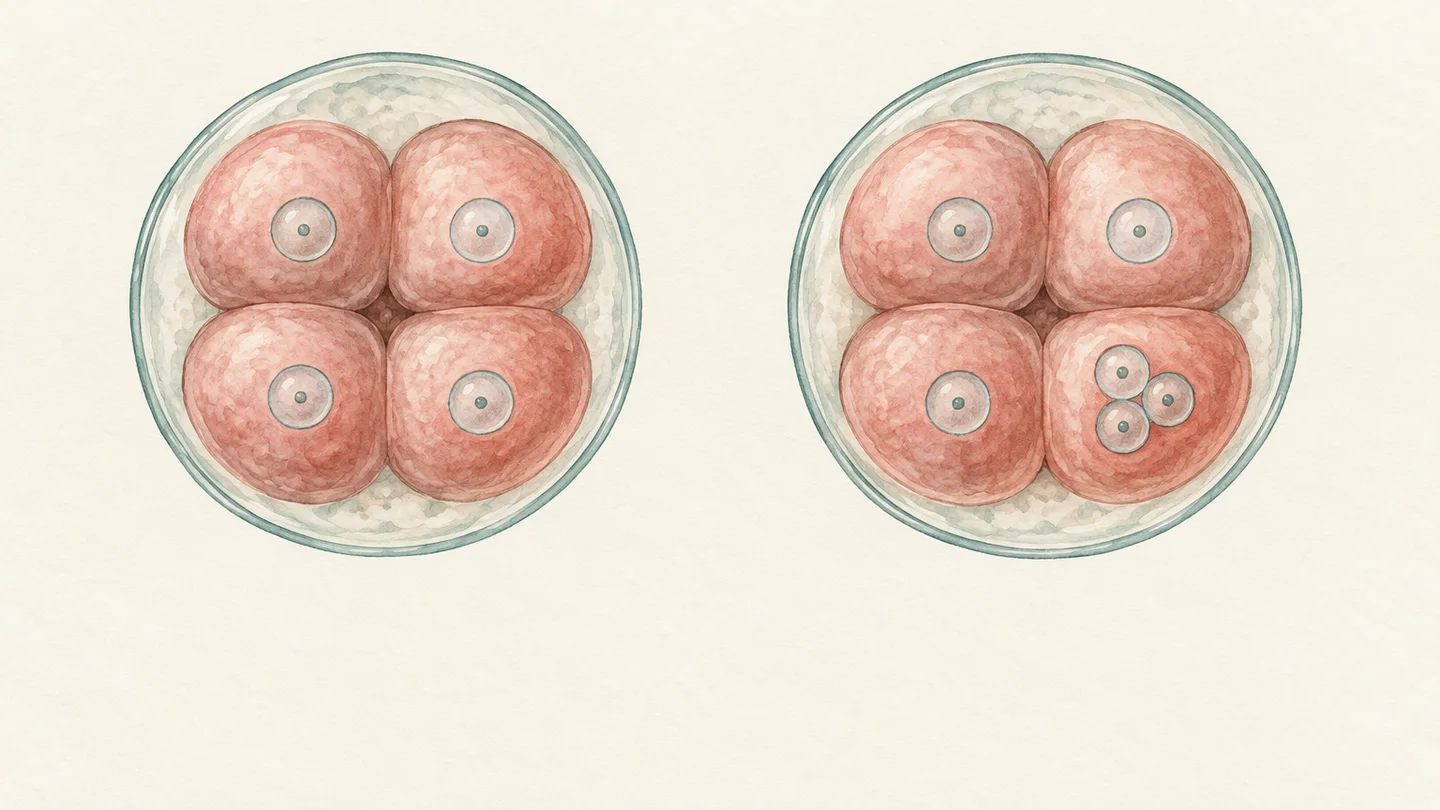
- Lesson 23.3 · 4 min Start hereRead Day 3 grades decoded What embryologists look at on day 2 and day 3, how the features rank an embryo, and why a lower rank is not a verdict.
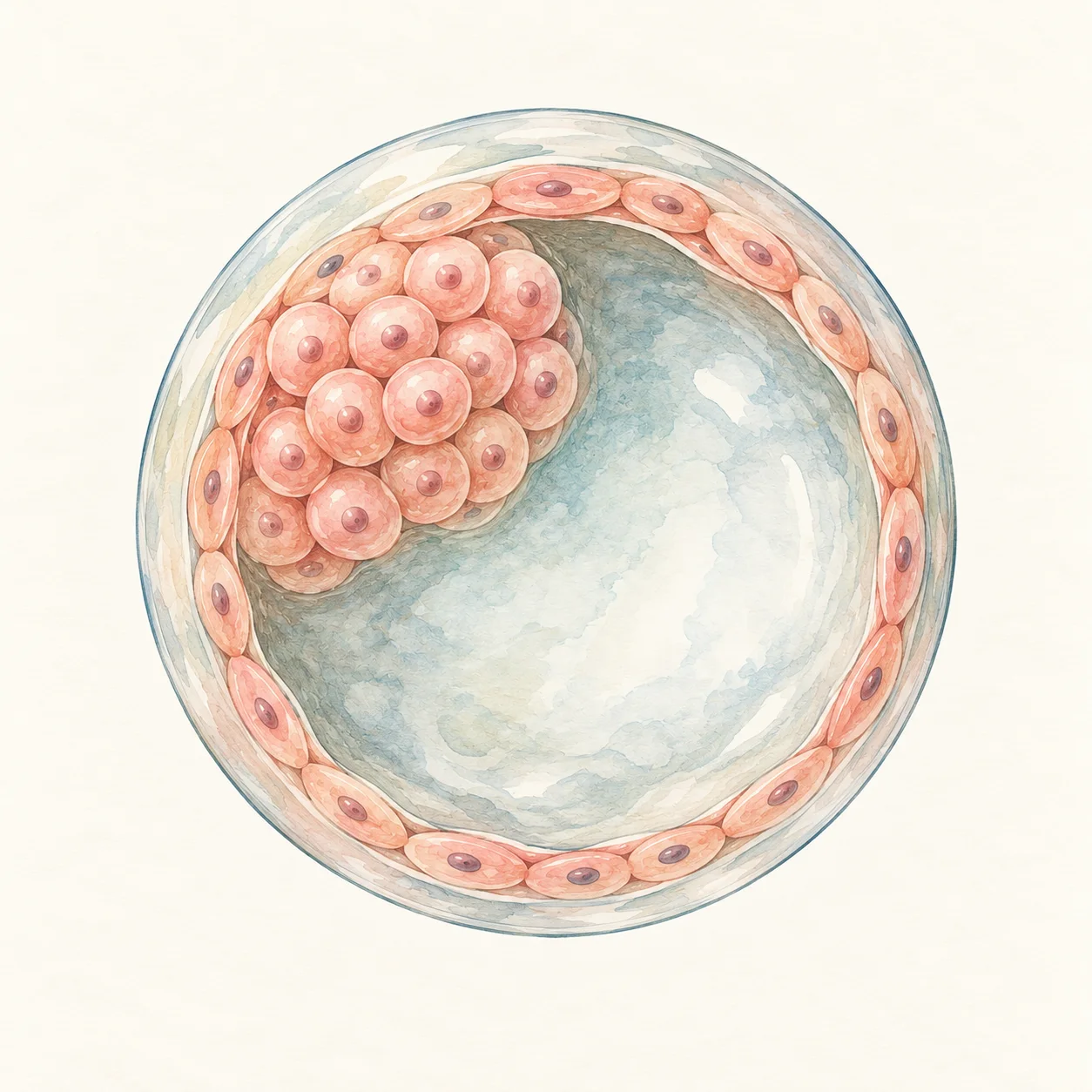
- Lesson 23.4 · 4 min Start hereRead Blastocyst grades decoded What a code such as 4AA or 3BB means, letter by letter, and why a grade describes chances rather than deciding them.
- Lesson 23.5 · 4 min Start hereRead Good questions, and when a cycle does not work The questions worth asking your clinic about your results, and what you can learn from a cycle that does not work.



Learning aims
By the end of this module you will be able to:
- Recognise the common words on an IVF lab report, from MII and 2PN to morula and blastocyst.
- Explain why numbers fall from eggs collected to mature eggs, fertilised eggs and blastocysts, and what ranges labs expect.
- Describe how day 3 embryos are ranked by cell number, evenness, fragmentation and nuclei.
- Decode a blastocyst grade such as 4AA or 3BB, part by part.
- Explain why embryo grades describe chances rather than deciding outcomes.
- Ask your clinic clear questions about your results, including after a cycle that does not work.
The module in brief
The module in brief
- Lab days are counted from egg collection (day 0); fertilisation is checked on day 1, and blastocysts form on day 5 or 6.
- Numbers fall at every step: labs expect about 75 to 90% of eggs to be mature, at least 65% of injected mature eggs to fertilise, and 40 to 60% of fertilised eggs to become blastocysts.
- Embryos often stop growing because of problems within the embryo, such as chromosome errors, which become more common as women get older.
- Day 3 embryos are ranked by cell number, evenness, fragmentation and nuclei: top, intermediate or low.
- In a blastocyst grade such as 4AA, the number is expansion, the first letter the inner cell mass and the second letter the trophectoderm.
- Grades rank embryos by appearance and estimate chances; lower-grade blastocysts can still become babies.
- Your chance over a complete cycle, every transfer from one egg collection, gives a truer picture than one transfer.
- A cycle that does not work is not anyone's fault, and a review of your lab report helps plan what comes next.